Your website is supposed to educate and convert. Instead, it's frustrating buyers and sending them to competitors.
B2B catalogs are complex. Thousands of products, technical specifications, industry jargon, multiple SKU formats. Your site search returns irrelevant results or nothing at all. Buyers know what they want but can't find it. They try different search terms, click through category pages, and eventually give up. 53% of B2B buyers abandon websites when they can't find what they need.

Problem #1
It's 9pm on a Thursday. A buyer is comparing your product to a competitor's. They have a specific technical question that would determine which one they choose. Your website has a contact form that promises a response "within 24-48 hours." The competitor has a chat that answers in seconds. By the time your rep responds Friday afternoon, the buyer has already made their decision—without you.

Problem #2
You've tried chatbots. They work great for simple questions like "what are your hours?" But B2B buyers ask complex questions: "What's the difference between model X and model Y for high-temperature applications?" or "Do you have a replacement for competitor part #ABC-123?" Traditional chatbots hit a wall. They can't understand technical language, access your product specs, or give answers that actually help.

Problem #3
You have sales reps who are brilliant at guiding buyers to the right product, handling objections, and building confidence. But they can only talk to one person at a time, during business hours, when someone actually calls. The other 90% of your website traffic never gets that experience. They get a brochure website and a contact form.

Problem #4
Two systems working together: one helps them find what they're looking for, one answers their questions and builds confidence.
System 1
An AI-powered search system trained on your entire product catalog, specifications, and documentation. It understands what buyers actually mean—even when they use the wrong terminology, misspell words, or search for a competitor's part number.
What it does
• Handles typos and misspellings — "centrfuge" still finds centrifuges
• Understands industry jargon — "rotovap" matches rotary evaporators
• Matches competitor part numbers — paste a competitor SKU, see your equivalent
• Answers technical questions — "what's the max RPM?" returns the answer, not just product pages
• Cites sources — answers link directly to spec sheets and documentation
• Matches competitor part numbers — paste a competitor SKU, see your equivalent
• Suggests alternatives — when exact match isn't available, recommends similar products
• Rescues zero-result searches — guides buyers when search returns nothing
Why it matters
Buyers find what they need in seconds instead of minutes. They don't leave frustrated. They don't call your sales team with questions that should be self-service. And they discover products they didn't know you carried—because the search actually works.
System 2
An AI assistant trained on your products, specifications, pricing rules, and sales methodology. It can answer complex technical questions, compare products, handle objections, and guide buyers toward the right solution—24 hours a day, 7 days a week.
What it does
• Answers technical questions — trained on your spec sheets, PDFs, and documentation
• Compares products — "what's the difference between X and Y?" with specific feature comparisons
• Makes recommendations — asks about requirements, suggests the right product
• Handles objections — trained on common concerns and how to address them
• Knows your competitors — can discuss competitive differences when asked
• Captures leads — collects contact info and context, syncs to your CRM
• Escalates appropriately — knows when to hand off to a human
• Speaks multiple languages — serve international buyers in their language
Why it matters
Your best salesperson's knowledge is now available 24/7 to every website visitor. Buyers get answers immediately, at the moment they're most engaged. Questions that would have gone unanswered—or sent buyers to competitors—now get handled instantly. And every conversation becomes a qualified lead in your CRM.
Search helps them find. Chat helps them decide. Together, they guide buyers from confusion to confidence.
Step 1

A procurement manager needs to replace aging equipment. They land on your site from a Google search, a referral, or a cold email you sent last month.
Step 2

They search for what they need—maybe using a competitor's part number from their current invoice. Your intelligent search matches it to your equivalent product instantly.
Step 3

"Will this work with my existing setup?" "What's the lead time?" "Do you offer volume pricing?" Instead of leaving to find answers elsewhere, they ask the chat.
Step 4

The assistant answers their questions using your product documentation. It asks clarifying questions about their application. It suggests complementary products they'll need. It handles the "is this really the right choice?" hesitation.
Step 5

The buyer submits a request—through chat, through a form, or by booking a call. Your sales rep receives the lead with complete context: what they searched for, what questions they asked, what concerns they raised, and what products they're interested in.
Step 6

The rep doesn't start from scratch. They know exactly what the buyer needs and what objections have already been addressed. The conversation picks up where the AI left off. Close rates go up. Sales cycles go down.
Generic AI gives generic answers. We train on everything that makes your business unique.

Every product, every variant, every specification. The AI knows your catalog as well as your most experienced rep.

Spec sheets, user manuals, installation guides, safety data sheets. When a buyer asks a technical question, the answer comes from your official documentation—cited.

We map competitor products to your equivalents. Buyers searching for a competitor part number find your match instantly.

If you have tiered pricing, volume discounts, or customer-specific rates, the AI can guide buyers appropriately without revealing confidential information.

How do your best reps qualify? What questions do they ask? How do they handle common objections? We encode your sales process into the AI.

Formal or casual? Technical or accessible? The AI matches your brand's tone and communication style.
Automation doesn't mean abdication. We build in the oversight that keeps AI helpful, not harmful.
Every conversation is logged and reviewable. You can see exactly what the AI is telling buyers, flag issues, and provide feedback that improves future responses.
We configure what the AI can and can't say. It won't make up specifications. It won't promise delivery dates it can't verify. It won't discuss topics outside its training. When it doesn't know, it says so.
Complex questions, upset customers, or high-value opportunities get routed to humans. The AI knows its limits and hands off gracefully.
We analyze conversations weekly. Questions the AI couldn't answer become training opportunities. Answers that missed the mark get corrected. The system gets smarter over time.
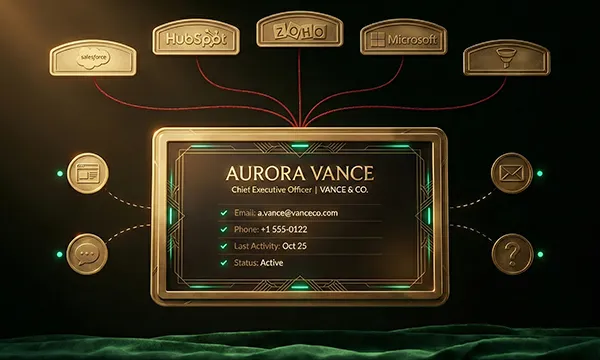
Every conversation syncs to Salesforce, HubSpot, Zoho, Pipedrive, or your CRM of choice. Leads arrive with complete context: questions asked, products discussed, objections raised.
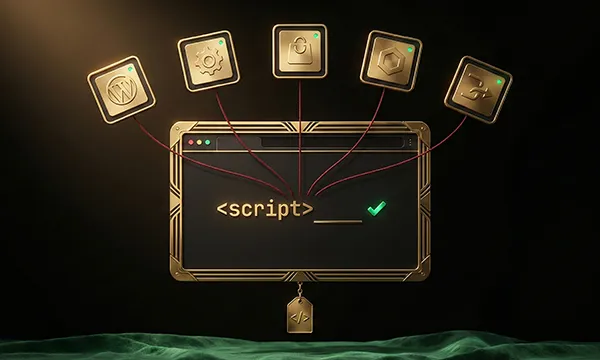
Installs on any website with a single line of code via Google Tag Manager. Works with WordPress, Magento, Shopify, BigCommerce, Odoo, Sitecore, HubSpot CMS, Webflow, and custom platforms.
If you have a live chat team, the AI can hand off conversations seamlessly when a human is needed or requested.

Conversations feed into your analytics. See what questions buyers are asking, where they're getting stuck, and which products generate the most interest.

Site search success rate
Questions answered after hours
Visitor-to-lead conversion
Chat engagement rate
Time to answer buyer question
Leads with complete context
"Our site search used to be a dead end. Buyers would search, get frustrated, and leave. Now they find what they need in seconds—and when they have questions, the AI answers them on the spot. Site-assisted conversions are up 300%."
— Director of E-Commerce
We train the AI on your products, configure the systems, and go live—with your team in control.
Weeks 1-2
Gather product catalog, specs, documentation, and competitor cross-reference data. Interview your sales team to understand common questions, objections, and winning responses. Define brand voice and communication guidelines.
Weeks 3-4
Train the search and chat AI on your data. Configure guardrails, escalation rules, and integration points. Build conversation flows for common scenarios.
Week 5
Internal testing with your team. Refine responses based on feedback. Stress-test edge cases. Verify CRM integration and lead routing.
Week 6
Go live with monitoring. Review conversations daily in week one. Tune responses based on real buyer interactions. Establish baseline metrics for ongoing optimization.
Right now, buyers are on your website with questions. They're searching for products. They're comparing you to competitors. They're trying to decide if you're the right fit. And your website is just sitting there, waiting for them to fill out a form. Let's fix that.