Your Prospects Ghost You at the Test Standard Specification
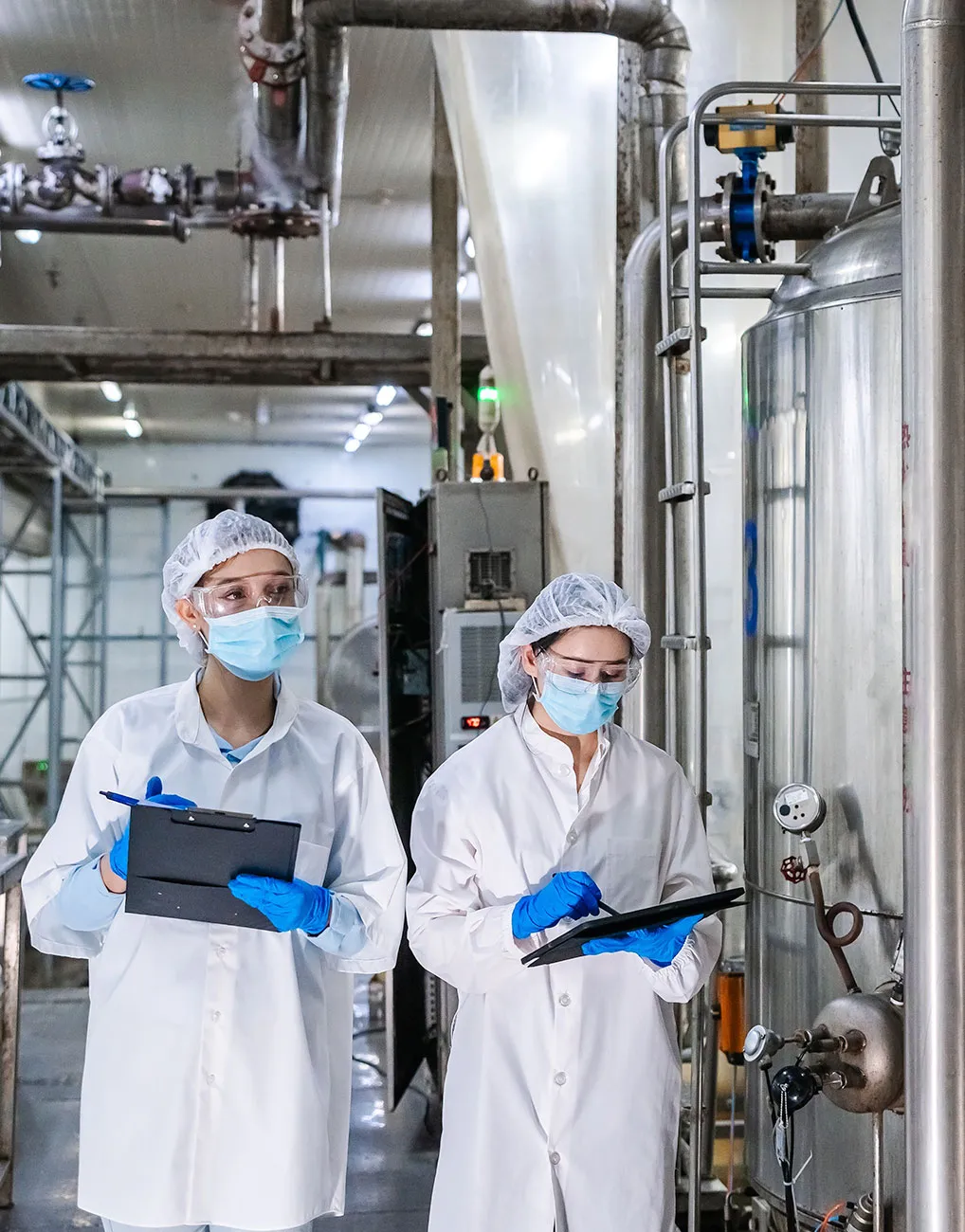
Here is the most expensive moment in your industrial testing equipment sales funnel: a QC manager, environmental compliance officer, or test lab director requests a quote for materials testing equipment, environmental monitoring instruments, or quality measurement systems. Your rep replies with a specification form covering test standards (ASTM, ISO, EPA), sample types, measurement ranges, accuracy requirements, throughput needs, data management specifications, and calibration requirements.
The buyer opens the form, realizes they need to reference their specific test standard documents, confirm accuracy requirements with their quality director, check data system compatibility with IT, and verify facility specifications with operations. They save the form and go back to running their facility.
Your sales team follows up. Repeatedly. The QC manager has 50 active quality issues to manage. Your specification form is not their priority.
Needs Analysis replaces that process. Your ENGAGE chatbot collects every requirement through an intelligent, guided conversation, right on your website. An agent is completing a real-time customer needs analysis, asking about test standards, sample types, measurement ranges, and compliance requirements, and automatically extracting data from uploaded documents such as test method procedures, quality specifications, and calibration records.
Without Lab Safety Needs Analysis
Days to weeks (if ever)
With Lab Safety Needs Analysis
Minutes, during the first visit
Without Lab Safety Needs Analysis
10-20% of sent assessments
With Lab Safety Needs Analysis
70-85% first-session completion
Without Lab Safety Needs Analysis
2-4 hours of follow-up
With Lab Safety Needs Analysis
Near zero
Without Lab Safety Needs Analysis
5-15 business days
With Lab Safety Needs Analysis
Same day
You have qualified buyers on your website right now. QC managers, lab directors, and environmental compliance officers who need testing equipment configured for specific standards, materials, and regulatory requirements. But between their intent and your quote lies the specification complexity that kills deals in industrial testing equipment sales.
Industrial and environmental testing equipment is purchased to meet specific test standards. ASTM D638 for tensile testing of plastics. ISO 6892-1 for metallic materials. EPA Method 524.2 for volatile organics in drinking water. Each standard dictates specific equipment capabilities, measurement ranges, accuracy requirements, and reporting formats.
Your specification form asks buyers to list the applicable standards. Many buyers know the standards they run but cannot translate those standard requirements into your equipment's specifications. They know they need to perform "ASTM D638 tensile testing" but they do not know whether your load cell capacity, crosshead speed range, and grip configuration satisfy the standard's requirements for their specific material thickness.
This translation gap between standard requirements and equipment specifications is where industrial testing equipment deals stall. The buyer cannot answer your technical questions without configuration guidance. Your team cannot provide guidance without knowing the application. Both sides wait.
Many testing labs serve multiple industries and run dozens of different test standards on the same or similar equipment. A materials testing lab might run ASTM D638 (plastics tensile), ASTM D790 (plastics flexural), ISO 178 (plastics flexural, different standard), ASTM E8 (metals tensile), and ASTM D2344 (composites short beam shear), all requiring different fixtures, load cells, and software configurations on the same universal testing machine.
Your specification form was designed for one standard at a time. A lab running 20 standards on one machine either fills out your form 20 times or writes a free-text description that your team cannot efficiently process. The result is the same: a multi-week configuration exercise that a competitor with a faster process wins by default.
Industrial testing equipment purchases involve calibration, certification, and compliance documentation that buyers must specify but often cannot articulate in your form's format. ISO 17025 accredited labs have specific calibration interval requirements, measurement uncertainty budgets, and traceability documentation needs. Automotive suppliers need equipment that satisfies IATF 16949. Aerospace buyers require compliance with Nadcap requirements.
Your form asks about these requirements, but a QC manager who knows they "need ISO 17025-compliant calibration" does not necessarily know what that requires from your specific equipment in terms of calibration accessories, certificates, and ongoing recalibration services.
Environmental testing equipment purchases are often driven by regulatory compliance deadlines. A new EPA discharge permit requires specific monitoring capabilities by a certain date. A state environmental agency mandates additional testing parameters. A consent decree requires enhanced monitoring with strict implementation timelines.
These buyers cannot wait three weeks for your specification process. They need a configured quote within days, backed by documentation that the proposed equipment meets the regulatory method requirements. Your three-week intake process makes you non-competitive for compliance-driven purchases, which are often the most urgent and highest-margin opportunities in your pipeline.
Your testing equipment prospects already have the data you need. It is in their test method procedures, quality specifications, calibration records, and regulatory permits. You are asking them to retype it into your specification form. They will not do it. Needs Analysis eliminates the retyping.
When a QC manager or compliance officer indicates they need testing equipment, Needs Analysis activates within the ENGAGE chat. The visitor fills out requirements through a guided, adaptive interface that translates their test standard and application needs into your equipment configurations.
Buyers can upload their test method procedures, quality specifications, calibration records, or regulatory permits. The AI extracts test standards, measurement parameters, accuracy requirements, and compliance specifications, mapping them to your equipment configurations.
For a multi-standard testing lab that would normally take days of manual standard-to-product cross-referencing, document upload reduces the specification process to under 15 minutes.
Needs Analysis translates test standards into equipment specifications:
The QC manager specifies test standards and application requirements. They share the workspace with IT for data system integration, with facilities for power and space, and with procurement for budget and timeline. Each stakeholder completes only their section.
The ENGAGE chatbot assists with ISO 17025, IATF 16949, Nadcap, and EPA method compliance questions, helping buyers understand how your equipment satisfies their specific accreditation or regulatory requirements.
STEP
1
A QC manager or environmental compliance officer chats with your ENGAGE chatbot. The chatbot introduces the needs analysis, opening a guided panel for standards-driven requirements collection.
STEP
2
Test method procedures, quality specs, calibration records, or regulatory permits are analyzed by the AI and used to pre-fill the specification form.
STEP
3
The form guides through standards-driven configuration:
STEP
4
Complete equipment specification summary before submission. Data routes to CRM with correct assignment.
STEP
5
Targeted sequences for incomplete sections reference specific remaining specifications and offer compliance guidance.
STEP
6
Our team monitors completion rates, updates standards databases, and refines standard-to-product mapping as your catalog and applicable standards evolve.
The standard fixes fail with the added complexity of test standard mapping and compliance documentation requirements.

A web form with no standards awareness cannot translate "ASTM D638" into the load cell capacity, crosshead speed, and grip configuration your equipment needs. The buyer enters a standard number. Your team manually cross-references it. The form creates more work than it eliminates and provides no guidance to the buyer.
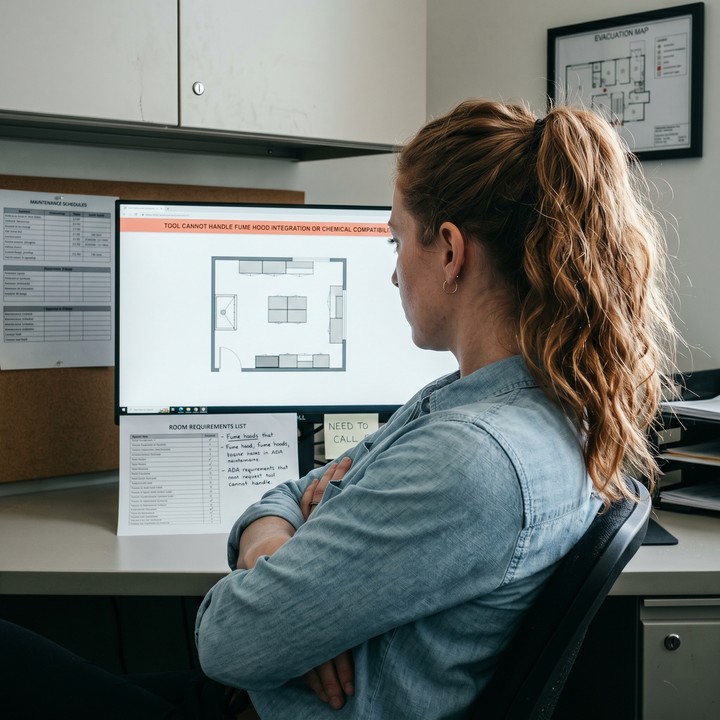
A custom system built for today's standards library is outdated when ASTM publishes revisions, ISO releases new versions, or EPA adds new method requirements. Standards change. Your product catalog changes. A static system cannot keep pace with either.

Your application engineers are your most valuable technical resource. Having them spend 45 minutes on intake calls collecting standard references and measurement specifications that a well-designed system could capture in 10 minutes misallocates their expertise. They should be solving application challenges and demonstrating equipment capabilities.
Here is how Needs Analysis replaces the specification form for specific industrial and environmental testing scenarios.
A testing laboratory serving the automotive industry needs a universal testing machine configured for tensile, compression, flexural, and peel testing across metals, plastics, and composites. Requirements span 12 ASTM and ISO standards, multiple load cell capacities, and specialized fixtures for each material type.
Without Industrial Testing Needs Analysis
Your specification form covers one test standard at a time. The lab manager lists all 12 standards on one line of the form, which tells your team nothing about the specific configurations needed for each. Your application engineer schedules a 90-minute call to walk through each standard's requirements. The call takes two sessions because the lab manager needed to verify fixture specifications for three of the standards. Total time from inquiry to usable specification: three weeks.
With Industrial Testing Needs Analysis
The lab manager selects their 12 test standards from the autocomplete list. The AI maps each standard to specific load cell ranges, crosshead speed requirements, and fixture recommendations. The manager reviews, confirms material-specific details, and adjusts two fixture selections based on their sample dimensions. Complete multi-standard specification submitted in 20 minutes. The application engineer receives the requirements and can focus their expertise on optimization recommendations rather than data collection.
A water utility needs to deploy continuous monitoring equipment for new EPA discharge permit requirements, with a 90-day compliance deadline. Requirements include specific EPA method compliance, detection limits, automated sampling, data logging with regulatory reporting capabilities, and LIMS integration.
Without Industrial Testing Needs Analysis
Your specification process typically takes three weeks. The compliance officer fills in the EPA methods but stalls at the data management and LIMS integration sections, which require IT input. The IT director is unavailable for two weeks. By the time the specification is complete, half the compliance deadline has passed. A competitor who provided a pre-configured system recommendation in five days based on the permit requirements alone is already under contract.
With Industrial Testing Needs Analysis
The compliance officer uploads the new discharge permit. The AI extracts the required parameters, detection limits, monitoring frequencies, and reporting requirements. The officer reviews, confirms the facility-specific details, and shares the IT integration section with their data management team through the collaborative workspace. Complete, permit-validated specification in your CRM within one week. Your team has 80 days to configure, deliver, and install instead of scrambling in 45.
An aerospace manufacturer needs hardness testing equipment that satisfies Nadcap accreditation requirements for their heat treatment facility. The specification must cover Rockwell, Vickers, and Brinell hardness methods per ASTM E18, E92, and E10 with specific reporting and traceability documentation.
Without Industrial Testing Needs Analysis
Your specification form asks for test standards, but the quality manager does not know how to specify the calibration, traceability, and documentation requirements that satisfy Nadcap beyond listing the standard numbers. Your team sends clarification questions about calibration intervals, measurement uncertainty requirements, and certified reference block specifications. Three rounds of email over two weeks before the specification is actionable.
With Industrial Testing Needs Analysis
The quality manager selects the applicable ASTM standards and indicates Nadcap accreditation. The AI automatically surfaces the Nadcap-specific requirements: calibration intervals, measurement uncertainty documentation, certified reference blocks, and reporting formats. The manager reviews, confirms, and submits. No clarification rounds needed because the compliance requirements were built into the intake logic.
Most chatbot companies sell you a platform and wish you luck. AI companies sell you a model and tell you to figure out the rest. Needs Analysis is neither of those things.
We design, build, deploy, and continuously optimize your entire industrial and environmental testing intake process. The outcome you pay for is specific: qualified requirements data flowing into your CRM, collected automatically from your website visitors, without your sales team lifting a finger.
When AI handles the grind of requirements collection, your salespeople finally get to do the work they got into sales to do. They stop chasing spreadsheets and start building relationships. They stop being data entry clerks and start being trusted advisors. That is not a threat to your sales team. It is the biggest gift you can give them.
Our team studies your current industrial and environmental testing intake workflow, from the spreadsheet or form you send today to the back-and-forth emails that follow. We identify where prospects drop off, which questions cause confusion, and what data your configuration or engineering team actually needs versus what you are collecting out of habit. Then we rebuild the entire experience from scratch, optimized for completion, not just data collection.
Every Needs Analysis deployment is custom. Your fields, your product logic, your conditional rules, your document types, your CRM mapping. We structure the intake to align with your actual industrial and environmental testing configuration and quoting workflow, so the data that arrives in your CRM is immediately usable by your team. This is not a template. It is a custom-built intake system trained on your products, your industry terminology, and your sales process.
After launch, our team reviews completion data, identifies friction points, and refines the experience.


You get a sales channel that improves each month without taking up any of your team's time.
CAPABILITY
DIY APPROACH
NEEDS ANALYSIS
Design
Your team builds forms in-house
We design the entire intake experience
AI Training
You configure rules yourself
We train AI on your products and documents
Document Analysis
Not available
AI extracts data from uploaded test standards, method procedures, calibration records, and quality specifications
Deployment
Your IT team integrates
We deploy within your ENGAGE chatbot
Monitoring
Your team reviews (if they have time)
Our team monitors completion rates daily
Optimization
Happens when someone has bandwidth
Continuous, data-driven improvement
CRM Integration
Your team maps fields
We configure routing, assignment, and field mapping
Follow-Up
Your team writes emails
We build targeted sequences for incomplete submissions
Accountability
Falls to whoever "owns" the form
We own the outcome: completed forms in your CRM
DIY APPROACH
Your team builds forms in-house
NEEDS ANALYSIS
We design the entire intake experience
DIY APPROACH
You configure rules yourself
NEEDS ANALYSIS
We train AI on your products and documents
DIY APPROACH
Not available
NEEDS ANALYSIS
AI extracts data from uploaded lab protocols, facility specifications, equipment inventories, and procedure documents
DIY APPROACH
Your IT team integrates
NEEDS ANALYSIS
We deploy within your ENGAGE chatbot
DIY APPROACH
Your team reviews (if they have time)
NEEDS ANALYSIS
Our team monitors completion rates daily
DIY APPROACH
Happens when someone has bandwidth
NEEDS ANALYSIS
Continuous, data-driven improvement
DIY APPROACH
Your team maps fields
NEEDS ANALYSIS
We configure routing, assignment, and field mapping
DIY APPROACH
Your team writes emails
NEEDS ANALYSIS
We build targeted sequences for incomplete submissions
DIY APPROACH
Falls to whoever "owns" the form
NEEDS ANALYSIS
We own the outcome: completed forms in your CRM
Your best application engineers do not just sell testing machines. They understand their customer's materials, processes, and quality challenges. They recommend test configurations that catch defects other labs miss. They help customers navigate accreditation audits. They become the testing partner that QC managers rely on year after year.
But they cannot do any of that if they are spending weeks collecting standard references and fixture specifications through email and phone calls.
Needs Analysis does not replace your application engineers. It gives them complete, standards-validated requirements before they ever pick up the phone. When AI handles the grind of standard-to-product mapping and specification collection, your engineers get to do the work they got into testing equipment sales to do: solve measurement challenges and help customers produce better products.
The engineer who walks into every demo already knowing the customer's standards, materials, and accuracy requirements? That is not luck. That is an intake process that works.
When your team has bandwidth to think strategically about accounts, they move from selling individual machines to designing complete testing programs. They identify standards coverage gaps that the customer has not considered. They become indispensable, and indispensable partners win the next purchase too.
Needs Analysis is an add-on to ENGAGE, so it inherits all of ENGAGE's integration capabilities and adds intake-specific connections for the industrial and environmental testing industry.


Installs through your existing ENGAGE chatbot. No additional code, no separate widget, no IT project. If ENGAGE is live on your site, you can activate Needs Analysis within it.
Learn more about the ENGAGE chatbot platform
IMPLEMENTATION
We do not hand you software and disappear. Here is what goes into building a Needs Analysis deployment that actually works.

Phase 1
Before we build anything, we study what you are doing today. We review your current industrial and environmental testing intake forms, spreadsheets, and questionnaires. We interview your sales and configuration teams about what data they actually need versus what they collect out of habit. We map the end-to-end process from inquiry to deliverable quote, identifying where prospects drop off, where data quality breaks down, and where your team spends the most time on back-and-forth.

Phase 2
We design the field sequence, conditional logic, and section grouping for optimal completion in your specific industrial and environmental testing context. Every field gets plain-language descriptions and help text so prospects know exactly what is being asked. We configure autocomplete libraries from your product catalog and known values. We train the document analysis AI on your industry's document formats, ensuring high extraction accuracy from day one.

Phase 3
We run hundreds of test scenarios across different industrial and environmental testing prospect types and use cases. We validate the accuracy of document analysis against your actual document formats. We test CRM integration and verify that data lands in the correct fields. We test follow-up workflows end-to-end. We provide a private preview for your team to try breaking it.

Phase 4
We activate Needs Analysis within your live ENGAGE chatbot, monitor real interactions during the first weeks, and make rapid adjustments based on actual prospect behavior. We establish baseline completion metrics and brief your sales team on the new lead flow.
Ongoing
We review completion data weekly, analyze performance monthly, and continuously train the AI as new document types and field patterns emerge. We update the intake as your products, pricing, or requirements change. Your needs analysis process stays current because we actively maintain it.
INVESTMENT
Needs Analysis is an add-on to Salesperson ENGAGE. Pricing is based on the complexity of your specific requirements collection process.

Number of product categories and test standard mappings

Complexity of standard-to-configuration logic

Document types that need AI analysis (test methods, quality specs, calibration records, regulatory permits)

CRM integration complexity

Multi-standard and multi-material workflow requirements
Compliance documentation needs (ISO 17025, IATF 16949, Nadcap, EPA)
Follow-up automation and collaborative workspace requirements
One-Time Setup
There is a one-time setup fee that covers the intake process audit, AI training, custom form design, CRM integration, and testing. This varies based on complexity, because a 15-field equipment sizing intake is fundamentally different from a 60-field technical assessment with document analysis.
Monthly Service
After launch, a monthly service fee covers continuous monitoring, optimization, AI retraining, follow-up automation, and ongoing support. This is not a software license that sits idle. It is an active service delivering completed intake forms into your CRM every month.
PROJECTED IMPACT
10-20% → 70-85%
Intake form completion rate
Before: 10-20%
3-10 business days → Under 15 min
Average time to complete intake
Before: 3-10 business days
3-6 per prospect → 0-1
Follow-up emails before completion
Before: 3-6 per prospect
2-4 hours → Near zero
Sales rep hours per intake
Before: 2-4 hours
5-15 business days → Same day to next business day
Time from inquiry to deliverable quote
Before: 5-15 business days
40-60% → Under 15%
Prospects lost to intake friction
Before: 40-60%
"This problem plagued our sales team for years. We knew AI could solve it, but we had no idea where to start. It honestly felt like a pipe dream. Then we started working with Salesperson Inc. and were shocked at how quickly they built it and how well it worked. Their team are seasoned sales funnel experts, not IT people or AI engineers. It is like talking to a colleague who actually cares about the results of your business."
Industrial Testing Equipment Manufacturer
If the answer involves weeks of cross-referencing standards and chasing clarifications from QC managers, you already know the problem.
Needs Analysis replaces the manual specification process with a standards-aware system that translates test requirements into equipment configurations automatically.
Right now, a QC manager with a compliance deadline is on your website. Will your intake process capture their requirements, or will they go to the competitor who makes standards-compliant quoting faster?
Stop conducting a needs analysis the hard way. Let the AI handle the process while your team handles the deals.