Your Prospects Ghost You at the Specification Sheet
Here is the most expensive moment in your lab equipment sales funnel: a lab manager requests a quote for centrifuges, ovens, autoclaves, or other general lab equipment. Your rep replies with a product inquiry form covering capacity requirements, speed or temperature ranges, power specifications, rotor or chamber configurations, compliance needs, and installation constraints. The lab manager opens it, realizes they need to check the lab's electrical panel for available circuits, confirm the bench dimensions with facilities, and verify protocol requirements with their supervisor. They save the form and move on to the next urgent thing.
Your sales team follows up. Three times. Four. Five. They offer a call. Silence.
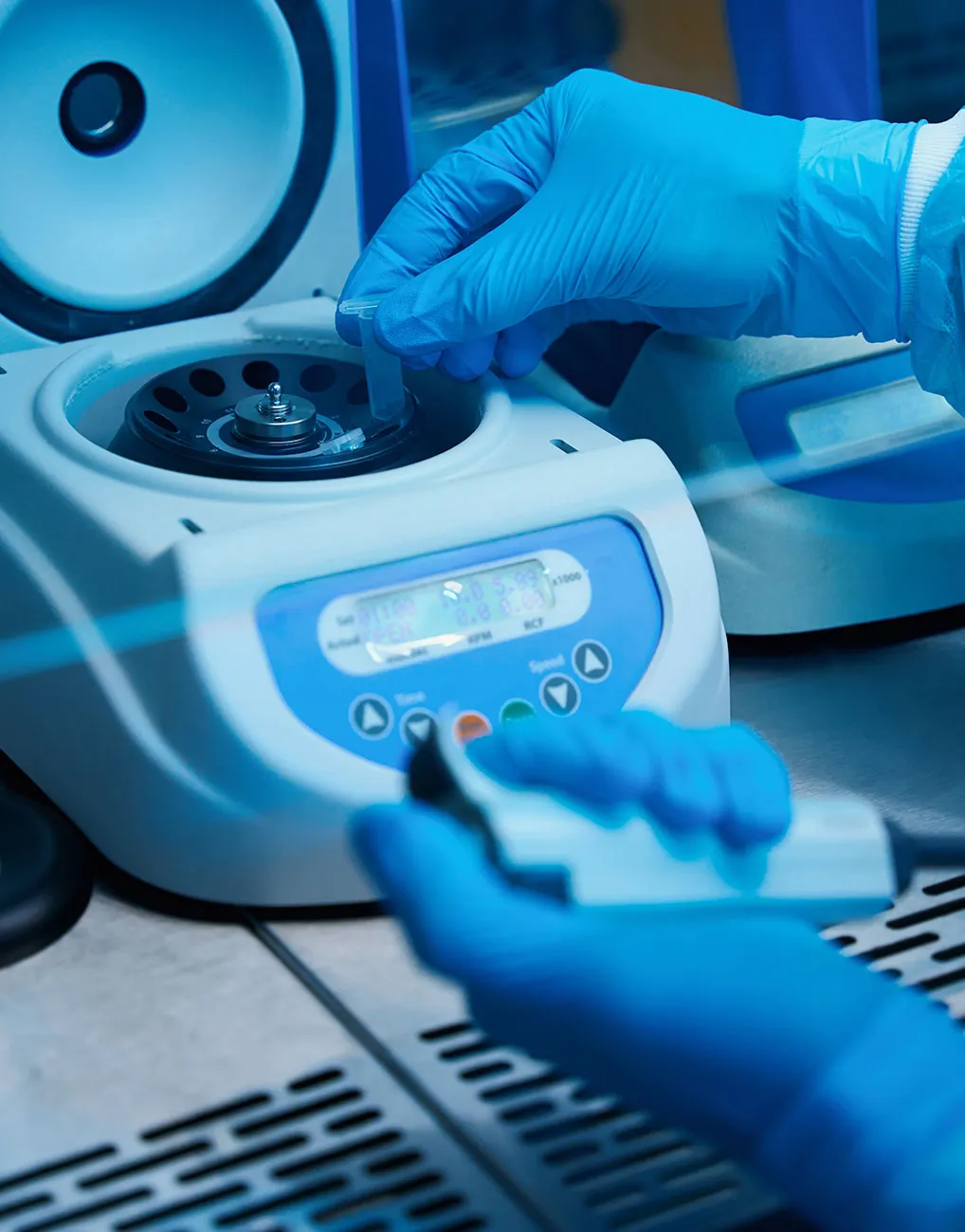
Every laboratory equipment manufacturer has some version of this intake process, and most run it the same way they have for years. Spreadsheets. PDF catalogs with handwritten annotations. Email threads with specification questions scattered across ten replies.
Needs Analysis replaces that entire process. Instead of emailing a specification form and hoping someone fills it out, your ENGAGE chatbot collects every requirement through an intelligent, guided conversation, right on your website, the moment the lab manager is ready to buy. An agent is completing a real-time customer needs analysis, asking about capacity, throughput, power, compliance, and facility constraints, adapting to the prospect's answers, and automatically extracting data from uploaded documents such as lab protocols, facility floor plans, or equipment inventories.
Without Lab Equipment Needs Analysis
Days to weeks (if ever)
With Lab Equipment Needs Analysis
Minutes, during the first visit
Without Lab Equipment Needs Analysis
10-20% of sent questionnaires
With Lab Equipment Needs Analysis
70-85% first-session completion
Without Lab Equipment Needs Analysis
2-4 hours of follow-up
With Lab Equipment Needs Analysis
Near zero
Without Lab Equipment Needs Analysis
5-15 business days
With Lab Equipment Needs Analysis
Same day
You have qualified buyers on your website right now. Lab managers and procurement officers looking for centrifuges, ovens, autoclaves, shakers, balances, and other essential laboratory equipment. But between their intent and your quote lies the most friction-heavy step in your sales process: collecting the technical requirements needed to recommend the right product configuration.
General lab equipment manufacturers often carry broad product lines. Dozens of centrifuge models across benchtop, floor-standing, micro, refrigerated, and high-speed categories. Multiple oven configurations spanning gravity convection, forced air, vacuum, and clean room rated. Autoclave options from benchtop to large-capacity, with gravity, pre-vacuum, and liquid cycle variations.
Your prospect does not navigate this catalog the way your product team does. They think in terms of their application: "I need to spin down blood samples at 3,000 RPM in 50mL tubes, and it needs to fit on this bench." Translating that into a specific model, rotor, and accessory configuration requires product expertise that most lab managers do not have for your specific brand.
Your intake form asks questions using your internal product hierarchy. The lab manager, who thinks in application terms, stares at fields that do not match how they describe their needs. They guess, enter something vague, or abandon the form entirely.
Lab equipment purchases involve facility constraints that many prospects do not check before submitting a quote request. Available bench space or floor area. Electrical specifications (voltage, phase, amperage, available circuits). Ventilation requirements for ovens generating heat or autoclaves producing steam. Weight capacity of lab benches and flooring. Door dimensions for delivery of floor-standing equipment.
Your intake form asks for these details upfront. The lab manager has the application requirements in their head but the facility specifications require a trip to the lab with a tape measure and a conversation with the facilities team. That trip never happens. The form sits incomplete.
When someone does complete the form without checking, incorrect facility data leads to wrong recommendations. An autoclave quoted for single-phase power shows up to a lab with only three-phase circuits. A benchtop centrifuge recommended based on stated bench dimensions does not actually fit because the door clearance was not considered. These misconfigurations erode trust and extend the sales cycle.
Lab managers often underspecify or overspecify their capacity needs because your intake form asks in terms of your product specifications ("chamber volume in liters" or "maximum RCF") rather than in terms of their workflow ("how many samples per day" or "what temperature and duration per batch").
This creates a data quality problem. Your configuration team receives numbers they cannot trust, spends time calculating whether the stated capacity actually matches the described workflow, and sends clarification questions back through the sales rep. Another round of back-and-forth. Another week of delay.
Large lab buildouts and university renovations often involve ordering multiple types of equipment across multiple rooms. A new biology building might need 15 centrifuges across three performance tiers, 8 ovens in two configurations, 4 autoclaves, 20 balances, and assorted shakers and mixers. Each room has different space constraints and electrical infrastructure.
Your intake process was designed for one product at a time. A multi-unit order across a dozen categories turns your questionnaire into a massive data collection project that nobody wants to manage. The procurement team creates their own spreadsheet to consolidate requirements, emails it to your rep in a format your configuration team cannot use, and the entire project stalls while your team reformats the data.
Your lab prospects already have the data you need. It is in their protocols, facility blueprints, equipment inventories, and procurement documents. You are asking them to retype it into your specification form. They will not do it. Needs Analysis eliminates the retyping entirely.
When a lab manager or procurement officer indicates they need a quote, Needs Analysis activates within the ENGAGE chat and opens a dedicated panel alongside the conversation. The visitor fills out requirements through a guided, adaptive interface that translates their application needs into your product configurations, while your ENGAGE chatbot stays available to answer questions in real time.
Lab managers can upload their protocols, facility floor plans, equipment inventories, or procurement specifications. The AI analyzes the documents, extracts relevant parameters like sample types, volumes, temperatures, capacity needs, and facility constraints, and pre-fills the intake form automatically.
For a multi-unit lab buildout that would normally take days of manual coordination, document upload reduces the data collection to under 15 minutes of review and confirmation.
Instead of asking lab managers to navigate your product catalog, Needs Analysis asks about their application first and recommends configurations based on their answers:
The ENGAGE chatbot stays active alongside the Needs Analysis panel. When a lab manager is unsure whether they need a gravity convection or forced-air oven, or whether a benchtop or floor-standing centrifuge fits their throughput, they ask the chatbot. The AI provides application-specific guidance that helps them complete the form accurately without waiting for a sales rep callback.
For large orders spanning multiple product categories and locations, Needs Analysis supports multi-unit configuration within a single session. Lab managers can specify requirements room by room, and the system consolidates everything into a unified requirements package in your CRM. The collaborative workspace allows different stakeholders (facilities, procurement, lab supervisors) to contribute their sections independently.
STEP
1
A lab manager is chatting with your ENGAGE chatbot. They ask about equipment options, request a quote, or describe an application need. The chatbot introduces the needs analysis: "I can help you get the right configuration and a quote. Let me pull up a few questions about your lab's requirements."
STEP
2
Lab protocols, facility specifications, equipment inventories, or procurement documents can be uploaded for AI analysis and field pre-population. Every extracted value is reviewed by the prospect before submission.
STEP
3
The form guides the prospect through each section:
STEP
4
Complete summary before submission. Edit any field, add notes, flag items for discussion. Submission routes to CRM with correct rep assignment.
STEP
5
Targeted sequences for incomplete submissions reference specific remaining fields and offer specific help. All follow-ups come from the assigned rep's email address.
STEP
6
Our team monitors completion rates, identifies friction points, and refines the experience. New product configurations and autocomplete options are added as your catalog evolves.
Most lab equipment manufacturers know their specification collection process is broken. The standard fixes all share the same failure modes.
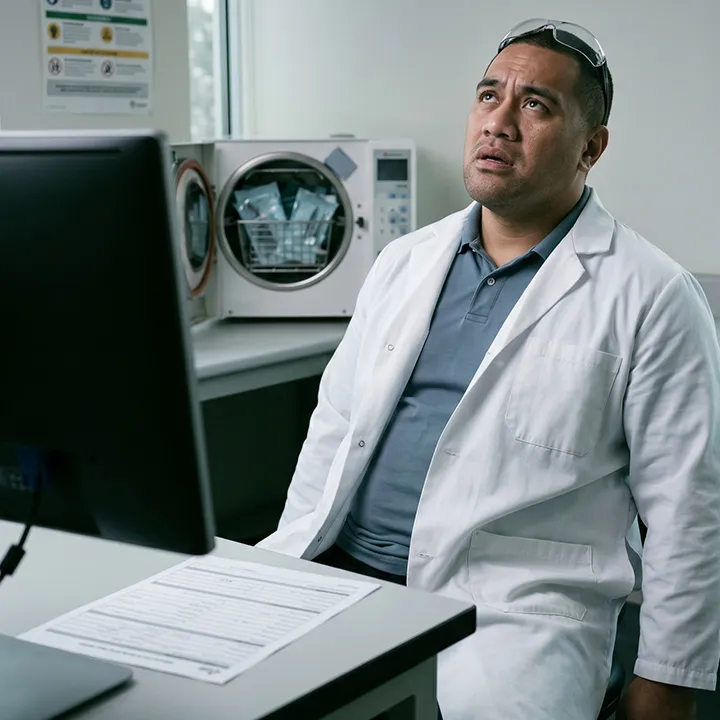
A web form with no conditional logic shows a lab manager all 50 fields regardless of whether they need a single benchtop centrifuge or a full lab buildout across 20 rooms. No document upload. No application-to-product mapping. No AI guidance when someone encounters "maximum continuous operating temperature with convection uniformity tolerance." The completion rate is 15%. The data quality is poor. Your team goes back to the phone.

A custom system built over six months for $100K works for your current catalog. Then you add a new centrifuge line, discontinue an oven model, and change the rotor compatibility matrix. Each change is a dev ticket. Within 18 months, the system reflects last year's catalog, not this year's. Nobody is optimizing it. Nobody is analyzing where prospects drop off.

Each intake call takes 30 minutes. With 20 active opportunities, that is 10 hours a week on data collection. Calls only happen during business hours, so the lab manager ready to submit requirements at 7pm after their last experiment is finished has to wait. By then, they have already found the specifications on a competitor's website and submitted their request there.
Every lab equipment manufacturer with a broad product catalog and configuration-driven sales process has a version of this problem. Here is how Needs Analysis replaces the specification sheet for specific scenarios.
A university is building a new science building with 30 teaching and research labs. The procurement officer needs to collect equipment requirements from 15 department heads covering centrifuges, ovens, autoclaves, balances, shakers, water baths, and stirrers, each room with unique specifications based on the research discipline.
Without Lab Equipment Needs Analysis
Your rep sends 15 copies of the general equipment specification form. Each department head fills it out differently, using different terminology, different units, and different levels of detail. Three departments never respond. The procurement officer spends two weeks consolidating into one master spreadsheet, which arrives at your desk in a format your configuration team cannot process. Total timeline from first request to usable data: 6-8 weeks.
With Lab Equipment Needs Analysis
The procurement officer creates one Needs Analysis session using the multi-location template. Each department head receives a streamlined link with only their relevant fields, guided by application-specific questions rather than product specification numbers. The AI helps translate "I need to sterilize glassware for 12 biology lab stations" into the right autoclave configuration. Consolidated, clean requirements arrive in your CRM within two weeks.
A pharmaceutical company needs precision ovens and stability chambers for a new formulation development lab. Requirements include USP temperature uniformity validation, specific temperature ranges for multiple applications (drying, depyrogenation, stability testing at 25/60 and 40/75 conditions), and clean room compatibility.
Without Lab Equipment Needs Analysis
Your 35-field form covers every oven type you sell. The formulation scientist fills in the temperature ranges but does not know the chamber volume needed because it depends on how many stability samples they will run simultaneously. The USP uniformity section asks technical questions the scientist needs to verify with their validation team. The form stalls at 50% completion for two weeks.
With Lab Equipment Needs Analysis
The scientist describes their applications: drying, depyrogenation, and two stability conditions. The AI asks about sample batch sizes and testing frequencies to calculate chamber volume recommendations. The USP uniformity fields come with plain-language explanations, and the chatbot clarifies the difference between mapping and qualification requirements. The scientist completes the intake in 12 minutes and shares the validation section with their QA team through the collaborative workspace.
A manufacturing company is standardizing centrifuges across 5 QC labs at different facilities. Each lab has different sample types, throughput requirements, and facility constraints, but the company wants to minimize the number of models for spare parts and training simplicity.
Without Lab Equipment Needs Analysis
Your rep sends specification forms to each facility. They come back with inconsistent data. Two facilities used RPM while three used RCF. One listed sample volumes in mL, another in number of tubes. Your team spends a day normalizing the data before they can even begin comparing requirements to find common models. Another round of clarification questions follows.
With Lab Equipment Needs Analysis
Each facility manager completes their requirements through the guided Needs Analysis interface. The system normalizes units automatically, maps sample descriptions to standardized categories, and flags cross-facility commonalities in the consolidated CRM record. Your configuration team sees immediately which model serves four of five sites, with a specific variant needed for the fifth. Time from intake to recommendation: 3 days.
A pharmaceutical company needs precision ovens and stability chambers for a new formulation development lab. Requirements include USP temperature uniformity validation, specific temperature ranges for multiple applications (drying, depyrogenation, stability testing at 25/60 and 40/75 conditions), and clean room compatibility.
Without Lab Equipment Needs Analysis
Your 35-field form covers every oven type you sell. The formulation scientist fills in the temperature ranges but does not know the chamber volume needed because it depends on how many stability samples they will run simultaneously. The USP uniformity section asks technical questions the scientist needs to verify with their validation team. The form stalls at 50% completion for two weeks.
With Lab Equipment Needs Analysis
The scientist describes their applications: drying, depyrogenation, and two stability conditions. The AI asks about sample batch sizes and testing frequencies to calculate chamber volume recommendations. The USP uniformity fields come with plain-language explanations, and the chatbot clarifies the difference between mapping and qualification requirements. The scientist completes the intake in 12 minutes and shares the validation section with their QA team through the collaborative workspace.
Most chatbot companies sell you a platform and wish you luck. AI companies sell you a model and tell you to figure out the rest. Needs Analysis is neither of those things.
We design, build, deploy, and continuously optimize your entire laboratory equipment intake process. The outcome you pay for is specific: qualified requirements data flowing into your CRM, collected automatically from your website visitors, without your sales team lifting a finger.
When AI handles the grind of requirements collection, your salespeople finally get to do the work they got into sales to do. They stop chasing spreadsheets and start building relationships. They stop being data entry clerks and start being trusted advisors. That is not a threat to your sales team. It is the biggest gift you can give them.
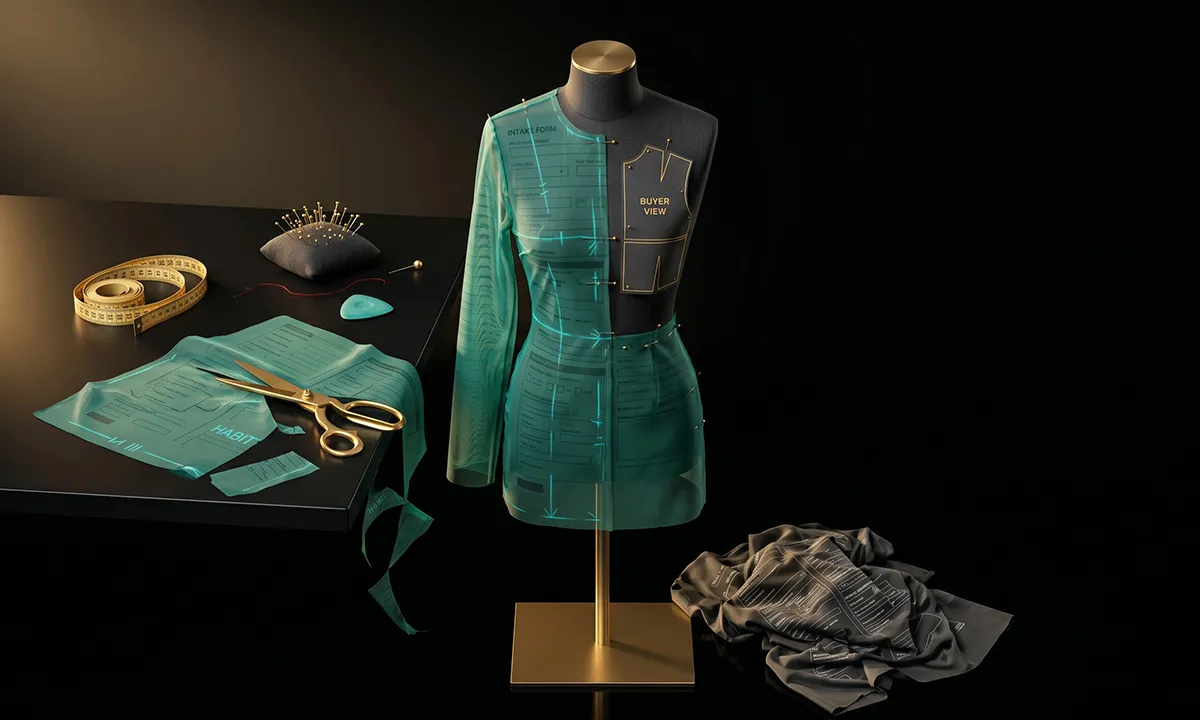
Our team studies your current laboratory equipment intake workflow, from the spreadsheet or form you send today to the back-and-forth emails that follow. We identify where prospects drop off, which questions cause confusion, and what data your configuration or engineering team actually needs versus what you are collecting out of habit. Then we rebuild the entire experience from scratch, optimized for completion, not just data collection.
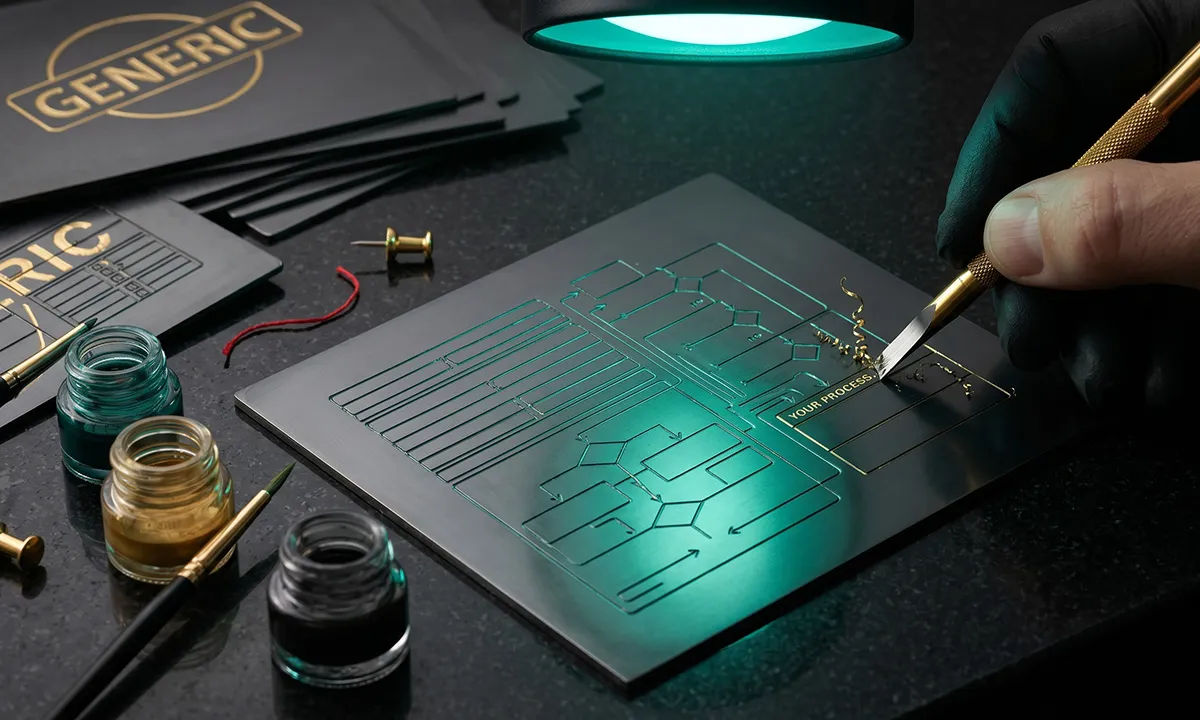
Every Needs Analysis deployment is custom. Your fields, your product logic, your conditional rules, your document types, your CRM mapping. We structure the intake to align with your actual laboratory equipment configuration and quoting workflow, so the data that arrives in your CRM is immediately usable by your team. This is not a template. It is a custom-built intake system trained on your products, your industry terminology, and your sales process.
After launch, our team reviews completion data, identifies friction points, and refines the experience.


You get a sales channel that improves each month without taking up any of your team's time.
CAPABILITY
DIY APPROACH
NEEDS ANALYSIS
Design
Your team builds forms in-house
We design the entire intake experience
AI Training
You configure rules yourself
We train AI on your products and documents
Document Analysis
Not available
AI extracts data from uploaded lab protocols, facility specifications, equipment inventories, and procedure documents
Deployment
Your IT team integrates
We deploy within your ENGAGE chatbot
Monitoring
Your team reviews (if they have time)
Our team monitors completion rates daily
Optimization
Happens when someone has bandwidth
Continuous, data-driven improvement
CRM Integration
Your team maps fields
We configure routing, assignment, and field mapping
Follow-Up
Your team writes emails
We build targeted sequences for incomplete submissions
Accountability
Falls to whoever "owns" the form
We own the outcome: completed forms in your CRM
DIY APPROACH
Your team builds forms in-house
NEEDS ANALYSIS
We design the entire intake experience
DIY APPROACH
You configure rules yourself
NEEDS ANALYSIS
We train AI on your products and documents
DIY APPROACH
Not available
NEEDS ANALYSIS
AI extracts data from uploaded lab protocols, facility specifications, equipment inventories, and procedure documents
DIY APPROACH
Your IT team integrates
NEEDS ANALYSIS
We deploy within your ENGAGE chatbot
DIY APPROACH
Your team reviews (if they have time)
NEEDS ANALYSIS
Our team monitors completion rates daily
DIY APPROACH
Happens when someone has bandwidth
NEEDS ANALYSIS
Continuous, data-driven improvement
DIY APPROACH
Your team maps fields
NEEDS ANALYSIS
We configure routing, assignment, and field mapping
DIY APPROACH
Your team writes emails
NEEDS ANALYSIS
We build targeted sequences for incomplete submissions
DIY APPROACH
Falls to whoever "owns" the form
NEEDS ANALYSIS
We own the outcome: completed forms in your CRM
Your best equipment sales reps do not just take orders. They walk the lab. They observe how scientists move between workstations. They notice that the centrifuge placement creates a bottleneck, or that the oven location requires lab staff to cross a high-traffic corridor. They design equipment layouts that improve workflow, not just check product boxes.
But your best reps cannot do any of that if they are spending 10 hours a week chasing specification forms and retyping data into your quoting system.
Needs Analysis does not replace your field sales team. It gives them the complete requirements picture before they ever visit the lab. When AI handles the grind of data collection, your reps get to do the work they got into equipment sales to do: consult, design, and configure solutions that genuinely improve how labs operate.
The rep who always seems to know the lab's workflow constraints before the first site visit? That is not someone who has a photographic memory. That is someone whose intake process delivers complete, validated equipment requirements before they ever step into the facility.
Nobody gets into lab equipment sales to update spreadsheets. Your reps got into this work because they understand labs, they understand workflows, and they know how the right equipment transforms productivity. Needs Analysis gives them the bandwidth to actually deliver on that promise.
The result is not just more closed deals. It is bigger deals, configured correctly from the start, with fewer returns, fewer change orders, and customers who trust your team enough to call you first for the next lab buildout.
Needs Analysis is an add-on to ENGAGE, so it inherits all of ENGAGE's integration capabilities and adds intake-specific connections for the laboratory equipment industry.


Installs through your existing ENGAGE chatbot. No additional code, no separate widget, no IT project. If ENGAGE is live on your site, you can activate Needs Analysis within it.
Learn more about the ENGAGE chatbot platform
IMPLEMENTATION
We do not hand you software and disappear. Here is what goes into building a Needs Analysis deployment that actually works.

Phase 1
Before we build anything, we study what you are doing today. We review your current laboratory equipment intake forms, spreadsheets, and questionnaires. We interview your sales and configuration teams about what data they actually need versus what they collect out of habit. We map the end-to-end process from inquiry to deliverable quote, identifying where prospects drop off, where data quality breaks down, and where your team spends the most time on back-and-forth.

Phase 2
We design the field sequence, conditional logic, and section grouping for optimal completion in your specific laboratory equipment context. Every field gets plain-language descriptions and help text so prospects know exactly what is being asked. We configure autocomplete libraries from your product catalog and known values. We train the document analysis AI on your industry's document formats, ensuring high extraction accuracy from day one.

Phase 3
We run hundreds of test scenarios across different laboratory equipment prospect types and use cases. We validate the accuracy of document analysis against your actual document formats. We test CRM integration and verify that data lands in the correct fields. We test follow-up workflows end-to-end. We provide a private preview for your team to try breaking it.
Phase 4
We activate Needs Analysis within your live ENGAGE chatbot, monitor real interactions during the first weeks, and make rapid adjustments based on actual prospect behavior. We establish baseline completion metrics and brief your sales team on the new lead flow.
Ongoing
We review completion data weekly, analyze performance monthly, and continuously train the AI as new document types and field patterns emerge. We update the intake as your products, pricing, or requirements change. Your needs analysis process stays current because we actively maintain it.
INVESTMENT
Needs Analysis is an add-on to Salesperson ENGAGE. Pricing is based on the complexity of your specific requirements collection process.

Number of product categories and configuration options covered

Complexity of application-to-product mapping logic

Document types that need AI analysis (protocols, facility specs, equipment inventories, procurement documents)

CRM integration complexity and custom field mapping requirements

Multi-unit and multi-location workflow requirements
Follow-up automation and collaborative workspace requirements
One-Time Setup
There is a one-time setup fee that covers the intake process audit, AI training, custom form design, CRM integration, and testing. This varies based on complexity, because a 15-field equipment sizing intake is fundamentally different from a 60-field technical assessment with document analysis.
Monthly Service
After launch, a monthly service fee covers continuous monitoring, optimization, AI retraining, follow-up automation, and ongoing support. This is not a software license that sits idle. It is an active service delivering completed intake forms into your CRM every month.
PROJECTED IMPACT
10-20% → 70-85%
Intake form completion rate
Before: 10-20%
3-10 business days → Under 15 min
Average time to complete intake
Before: 3-10 business days
3-6 per prospect → 0-1
Follow-up emails before completion
Before: 3-6 per prospect
2-4 hours → Near zero
Sales rep hours per intake
Before: 2-4 hours
5-15 business days → Same day
Time from inquiry to deliverable quote
Before: 5-15 business days
40-60% → Under 15%
Prospects lost to intake friction
Before: 40-60%
"This problem plagued our sales team for years. We knew AI could solve it, but we had no idea where to start. It honestly felt like a pipe dream. Then we started working with Salesperson Inc. and were shocked at how quickly they built it and how well it worked. Their team are seasoned sales funnel experts, not IT people or AI engineers. It is like talking to a colleague who actually cares about the results of your business."
Laboratory Equipment Manufacturer
If the answer makes you wince, you already know the problem. Your specification collection process is where qualified equipment deals go to die.
Every day that a lab manager stares at your specification form and closes the tab is another day a competitor with a simpler buying process gets the purchase order.
Needs Analysis fixes this. Not with another form builder, but with a fully managed system that collects your requirements, analyzes your prospects' lab documents, and delivers completed intake data to your sales team, automatically, 24/7.
Right now, a lab manager is on your website looking for equipment. They have budget. They have a procurement timeline. Will your intake process let them buy from you?
Stop conducting a needs analysis the hard way. Let the AI handle the process while your team handles the deals.