Your Prospects Ghost You at the Application Worksheet
Here is the most expensive moment in your life science equipment sales funnel: a researcher or lab manager requests a quote for a PCR system, a flow cytometer, a cell culture platform, or a genomics instrument. Your rep replies with a technical worksheet covering application requirements, sample types, throughput needs, detection specifications, software preferences, biosafety level constraints, and budget parameters.
The researcher opens it, realizes they need protocol details from their postdoc, budget confirmation from the PI, and biosafety classification confirmation from the EHS office. They save the worksheet. It never gets completed.
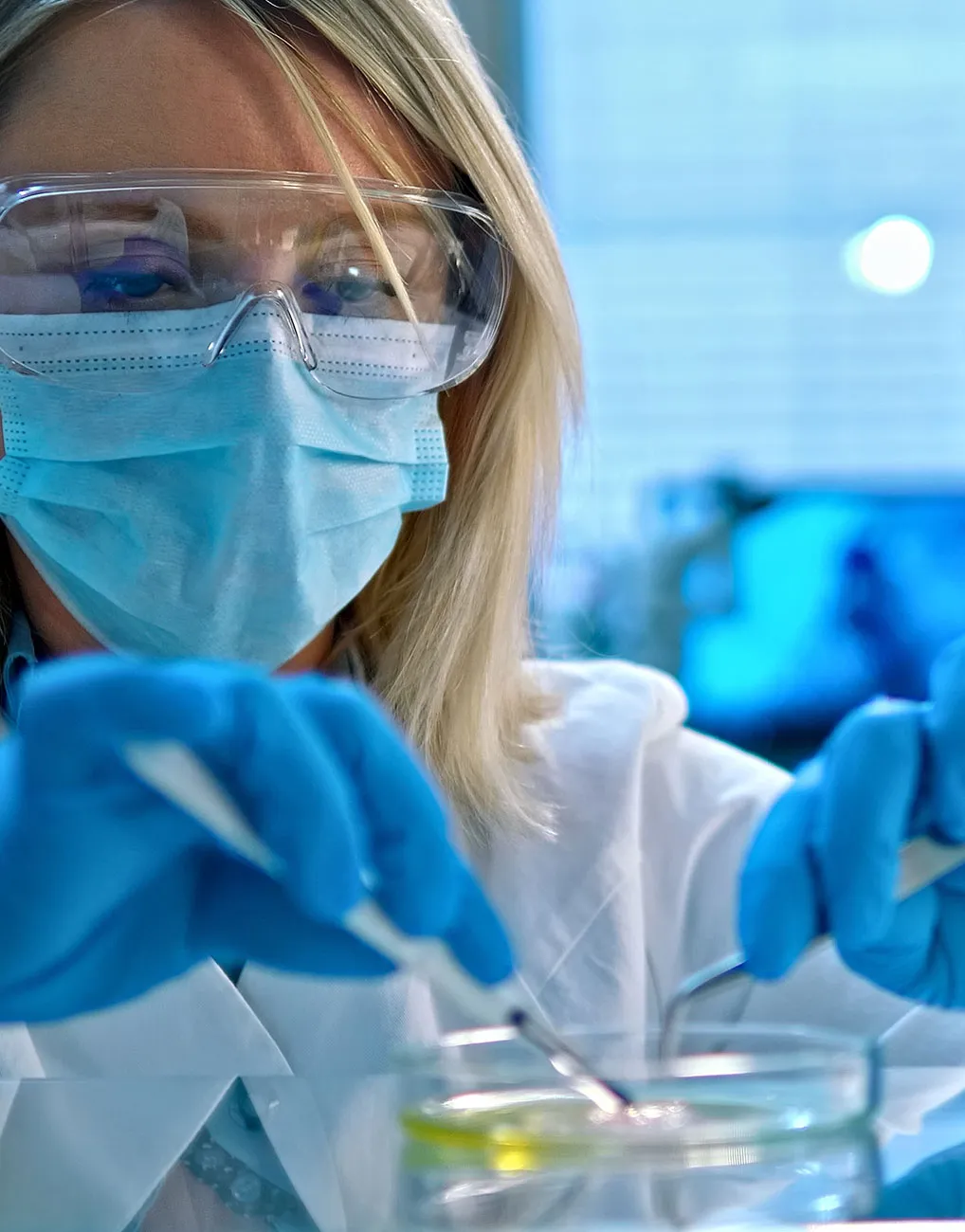
Your rep follows up. And follows up. The researcher is running experiments, writing papers, submitting grants. Your intake form is not their priority. The deal dies quietly.
Needs Analysis replaces that entire process. Instead of emailing a worksheet, your ENGAGE chatbot collects every requirement through an intelligent, guided conversation, right on your website. An agent is completing a real-time customer needs analysis, asking about applications, sample types, throughput, detection requirements, and research goals, adapting to the researcher's answers, and automatically extracting data from uploaded documents such as research protocols, grant proposals, or experimental procedures.
Without Life Science Needs Analysis
Days to weeks (if ever)
With Life Science Needs Analysis
Minutes, during the first visit
Without Life Science Needs Analysis
10-20% of sent questionnaires
With Life Science Needs Analysis
70-85% first-session completion
Without Life Science Needs Analysis
2-4 hours of follow-up
With Life Science Needs Analysis
Near zero
Without Life Science Needs Analysis
5-15 business days
With Life Science Needs Analysis
Same day
You have qualified buyers on your website right now. Researchers with grant funding, lab managers with approved capital budgets, and procurement teams with purchase requisitions ready to go. But between their intent and your quote lies the most friction-heavy step in your sales process: collecting the application-specific requirements needed to recommend the right life science platform.
Life science researchers think in terms of their biology, not your product catalog. They need to "do single-cell RNA sequencing on primary human T cells from PBMC isolations." Translating that into a specific instrument configuration, with the right optics, fluidics, and software modules, requires product expertise that most researchers do not have for your platform.
Your intake form asks technical questions using your product terminology. The researcher answers using their research terminology. The gap between these two languages is where deals stall, because neither side can bridge it efficiently through a static spreadsheet.
This is not a knowledge problem. It is a translation problem. The researcher knows exactly what they need biologically. Your configuration team knows exactly what to recommend technically. The intake form fails to connect the two.
Academic and government-funded researchers operate on grant timelines. Equipment budgets often come with fiscal year deadlines or grant period expiration dates. A researcher with $200K in capital equipment funding that expires in 90 days needs a quote, a vendor comparison, and purchase justification documentation within weeks.
Your three-week intake-to-quote process consumes a third of their procurement window. If a competing distributor provides a configured quote in five days, the funding goes there. Not because their platform is better, but because the researcher cannot afford to wait for your process.
Life science researchers evaluating equipment from multiple manufacturers or distributors face a unique burden: filling out separate intake questionnaires from three or four vendors, each asking the same basic questions in different formats. Your questionnaire competes for the researcher's attention against two or three others.
The vendor with the simplest, fastest intake process gets the most complete requirements data and delivers the most accurate quote first. That vendor wins the evaluation more often than not. If your intake process is the hardest one in the comparison, you start at a disadvantage that no amount of product superiority can overcome.
Life science equipment purchases involve biosafety considerations that add complexity to the intake process. BSL-2 and BSL-3 facilities have specific airflow, containment, and decontamination requirements. Institutional biosafety committees (IBC) may have equipment approval processes. Radioactive materials licenses, select agent registrations, and IRB approvals can affect which instrument configurations are permissible.
Your intake form asks about these requirements, but researchers often do not know how to map their biosafety obligations to your product specifications. They know they work in a BSL-2 lab with a specific IBC protocol, but they do not know which of your instrument configurations meets those containment requirements without ventilation modifications.
Your research prospects already have the data you need. It is in their protocols, grant proposals, experimental procedures, and institutional compliance documents. You are asking them to retype it into your worksheet. They will not do it. Needs Analysis eliminates the retyping entirely.
When a researcher indicates they need a quote or want to evaluate platforms, Needs Analysis activates within the ENGAGE chat. The visitor fills out requirements through a guided, adaptive interface that translates their research application into your product configurations, while the ENGAGE chatbot provides real-time guidance.
Researchers can upload protocols, grant proposals with equipment justification sections, experimental procedures, or published methods. The AI extracts application requirements, sample types, throughput estimates, detection specifications, and compliance requirements, pre-filling the intake form automatically.
For a multi-application instrument evaluation that would normally take days of researcher time, document upload reduces it to under 10 minutes of review and confirmation.
Needs Analysis bridges the gap between research language and product specifications:
The ENGAGE chatbot stays active alongside the Needs Analysis panel. When a researcher is unsure which detection modality suits their assay, or whether their sample throughput requires an upgrade module, they ask the chatbot. The AI, trained on your product and application knowledge, provides guidance that helps the researcher make informed choices without waiting for a specialist callback.
The researcher fills in application requirements. They share the collaborative workspace with the PI for budget and justification, with EHS for biosafety compliance, with IT for data management and software integration, and with procurement for purchasing details. Each stakeholder completes only their relevant section.
STEP
1
A researcher chats with your ENGAGE chatbot about platforms, capabilities, or pricing. The chatbot recognizes purchase intent and introduces the needs analysis, opening a guided panel alongside the conversation.
STEP
2
Research protocols, grant proposals, experimental procedures, or institutional documents are analyzed by the AI and used to pre-fill the intake form. Every extracted value is reviewed before submission.
STEP
3
The form translates biological questions into product requirements:
STEP
4
Complete summary, editable fields, and notes before submission. Data routes to your CRM with correct assignment.
STEP
5
Targeted sequences for incomplete submissions reference specific remaining fields. Follow-ups come from the assigned rep's email address, maintaining the personal relationship.
STEP
6
Our team monitors completion rates, refines application-to-product translation, and improves document analysis accuracy as we process more life science documents.
The standard approaches all fail, but with the added complexity of research-to-product translation and grant-driven procurement timelines.
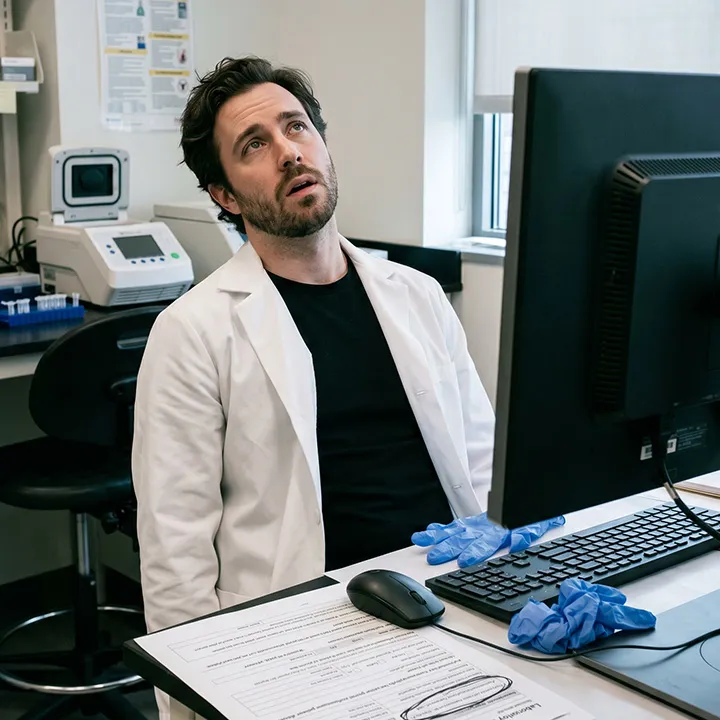
A web form with no application-aware logic shows every researcher every field. No document upload. No translation between research language and product specifications. No AI guidance when a procurement officer encounters "excitation wavelength range with minimum power density." Completion rate: 12%.

A custom system built at significant cost works for your current product portfolio. Then you add distribution rights for a new manufacturer's platform. The intake logic does not support it. Your bioinformatics team publishes new analysis workflows. The intake does not reflect them. Within a year, the system is outdated.

Your FAS team is your most expensive human resource. Having them spend 45 minutes collecting requirements data that researchers could provide in 10 minutes through a well-designed system wastes their application expertise. They should be running demonstrations and solving experimental challenges, not transcribing protocol details into your quoting system.
Here is how Needs Analysis replaces the worksheet for specific life science scenarios.
An immunology research group needs to configure a flow cytometry platform for multi-parameter analysis of immune cell subsets. Requirements include laser and detector configurations for a 15-color panel, sample throughput for 50-100 samples per day, cell sorting capability, and BSL-2 containment compatibility.
Without Life Science Needs Analysis
Your application worksheet asks for specific laser lines, filter configurations, and detector specifications. The researcher knows their panel design (which antibodies and fluorochromes they use) but cannot translate that into your instrument's optical configuration without help. The worksheet stalls at the detector section. Your FAS calls to walk through it, taking 45 minutes of both their time. A competitor who sent a configured recommendation based on the researcher's antibody panel (which they submitted via a simple email) is already scheduling a demo.
With Life Science Needs Analysis
The researcher describes their panel: CD3, CD4, CD8, CD25, FoxP3, and ten other markers with specified fluorochromes. The AI maps the fluorochrome set to your optical configuration, recommends laser lines and filter sets, and pre-configures the detector layout. The researcher reviews, adjusts two settings, adds throughput and sorting requirements, and submits. Your FAS receives a complete, application-validated requirements package and can focus their expertise on panel optimization rather than data collection.
A university genomics core is upgrading their next-generation sequencing platform. They need to evaluate systems based on read length, throughput per run, multiplexing capacity, library prep compatibility, and integration with their existing bioinformatics pipeline.
Without Life Science Needs Analysis
Your intake questionnaire covers every sequencing application from targeted panels to whole genomes. The core director completes the sequencing specifications but the bioinformatics integration section requires IT input that takes two weeks to schedule. The budget justification section needs the core advisory board's approval. The worksheet circulates among five stakeholders for a month.
With Life Science Needs Analysis
The core director uploads their current instrument utilization report and sample submission log. The AI extracts run configurations, throughput patterns, and library prep frequencies. The director reviews, adds upgrade requirements, and shares the IT integration section and budget section with the relevant stakeholders through the collaborative workspace. Complete requirements arrive in your CRM within two weeks.
A pharmaceutical R&D lab needs an automated cell culture system for high-throughput screening. Requirements include plate format compatibility, environmental control specifications, liquid handling integration, contamination control for the BSL-2 environment, and LIMS connectivity.
Without Life Science Needs Analysis
Your 40-field questionnaire covers every automation platform you distribute. The R&D scientist fills in the biological requirements but stalls at the engineering sections: clean room classification, electrical requirements, exhaust specifications. These require facilities and EHS input. The form sits incomplete for three weeks while the scientist tries to schedule meetings with both departments.
With Life Science Needs Analysis
The scientist describes their assay workflow: cell types, plate formats, media change schedules, and screening throughput. The AI translates workflow requirements into automation specifications and identifies the facility and compliance sections that need other stakeholders. The scientist completes their sections in 15 minutes, then shares targeted links with facilities and EHS. Each stakeholder completes only their portion. Complete requirements within one week.
Most chatbot companies sell you a platform and wish you luck. AI companies sell you a model and tell you to figure out the rest. Needs Analysis is neither of those things.
We design, build, deploy, and continuously optimize your entire life science intake process. The outcome you pay for is specific: qualified requirements data flowing into your CRM, collected automatically from your website visitors, without your sales team lifting a finger.
When AI handles the grind of requirements collection, your salespeople finally get to do the work they got into sales to do. They stop chasing spreadsheets and start building relationships. They stop being data entry clerks and start being trusted advisors. That is not a threat to your sales team. It is the biggest gift you can give them.
Our team studies your current life science intake workflow, from the spreadsheet or form you send today to the back-and-forth emails that follow. We identify where prospects drop off, which questions cause confusion, and what data your configuration or engineering team actually needs versus what you are collecting out of habit. Then we rebuild the entire experience from scratch, optimized for completion, not just data collection.
Every Needs Analysis deployment is custom. Your fields, your product logic, your conditional rules, your document types, your CRM mapping. We structure the intake to align with your actual life science configuration and quoting workflow, so the data that arrives in your CRM is immediately usable by your team. This is not a template. It is a custom-built intake system trained on your products, your industry terminology, and your sales process.
After launch, our team reviews completion data, identifies friction points, and refines the experience.


You get a sales channel that improves each month without taking up any of your team's time.
CAPABILITY
DIY APPROACH
NEEDS ANALYSIS
Design
Your team builds forms in-house
We design the entire intake experience
AI Training
You configure rules yourself
We train AI on your products and documents
Document Analysis
Not available
AI extracts data from uploaded research protocols, grant proposals, experimental procedures, and laboratory SOPs
Deployment
Your IT team integrates
We deploy within your ENGAGE chatbot
Monitoring
Your team reviews (if they have time)
Our team monitors completion rates daily
Optimization
Happens when someone has bandwidth
Continuous, data-driven improvement
CRM Integration
Your team maps fields
We configure routing, assignment, and field mapping
Follow-Up
Your team writes emails
We build targeted sequences for incomplete submissions
Accountability
Falls to whoever "owns" the form
We own the outcome: completed forms in your CRM
DIY APPROACH
Your team builds forms in-house
NEEDS ANALYSIS
We design the entire intake experience
DIY APPROACH
You configure rules yourself
NEEDS ANALYSIS
We train AI on your products and documents
DIY APPROACH
Not available
NEEDS ANALYSIS
AI extracts data from uploaded research protocols, grant proposals, experimental procedures, and laboratory SOPs
DIY APPROACH
Your IT team integrates
NEEDS ANALYSIS
We deploy within your ENGAGE chatbot
DIY APPROACH
Your team reviews (if they have time)
NEEDS ANALYSIS
Our team monitors completion rates daily
DIY APPROACH
Happens when someone has bandwidth
NEEDS ANALYSIS
Continuous, data-driven improvement
DIY APPROACH
Your team maps fields
NEEDS ANALYSIS
We configure routing, assignment, and field mapping
DIY APPROACH
Your team writes emails
NEEDS ANALYSIS
We build targeted sequences for incomplete submissions
DIY APPROACH
Falls to whoever "owns" the form
NEEDS ANALYSIS
We own the outcome: completed forms in your CRM
Your best field application scientists do not just sell instruments. They solve experimental problems. They optimize assay protocols, troubleshoot unexpected results, and design workflows that save researchers months of trial and error. They become the technical partner that researchers call before they call their PI.
But your FAS team cannot do any of that if they are spending hours each week collecting requirements data through phone calls and email chains.
Needs Analysis does not replace your application specialists. It takes the administrative burden off their plate. When AI handles the grind of requirements collection and research-to-product translation, your FAS team gets to do the work they got into life science sales to do: solve scientific problems, demonstrate capabilities, and build relationships that generate multi-year account revenue.
The FAS who always seems to understand the researcher's application before the first demo? That is not someone with superhuman intuition. That is someone whose intake process delivers complete, application-validated requirements before they ever call the lab.
When your team has bandwidth to think strategically, they do not just sell more instruments. They identify cross-selling opportunities across entire research programs. They spot grant renewal timelines and position for the next equipment cycle. They become the partner that grows accounts, not just closes transactions.
Needs Analysis is an add-on to ENGAGE, so it inherits all of ENGAGE's integration capabilities and adds intake-specific connections for the life science industry.


Installs through your existing ENGAGE chatbot. No additional code, no separate widget, no IT project. If ENGAGE is live on your site, you can activate Needs Analysis within it.
Learn more about the ENGAGE chatbot platform
IMPLEMENTATION
We do not hand you software and disappear. Here is what goes into building a Needs Analysis deployment that actually works.

Phase 1
Before we build anything, we study what you are doing today. We review your current life science intake forms, spreadsheets, and questionnaires. We interview your sales and configuration teams about what data they actually need versus what they collect out of habit. We map the end-to-end process from inquiry to deliverable quote, identifying where prospects drop off, where data quality breaks down, and where your team spends the most time on back-and-forth.

Phase 2
We design the field sequence, conditional logic, and section grouping for optimal completion in your specific life science context. Every field gets plain-language descriptions and help text so prospects know exactly what is being asked. We configure autocomplete libraries from your product catalog and known values. We train the document analysis AI on your industry's document formats, ensuring high extraction accuracy from day one.

Phase 3
We run hundreds of test scenarios across different life science prospect types and use cases. We validate the accuracy of document analysis against your actual document formats. We test CRM integration and verify that data lands in the correct fields. We test follow-up workflows end-to-end. We provide a private preview for your team to try breaking it.
Phase 4
We activate Needs Analysis within your live ENGAGE chatbot, monitor real interactions during the first weeks, and make rapid adjustments based on actual prospect behavior. We establish baseline completion metrics and brief your sales team on the new lead flow.
Ongoing
We review completion data weekly, analyze performance monthly, and continuously train the AI as new document types and field patterns emerge. We update the intake as your products, pricing, or requirements change. Your needs analysis process stays current because we actively maintain it.
INVESTMENT
Needs Analysis is an add-on to Salesperson ENGAGE. Pricing is based on the complexity of your specific requirements collection process.

Number of product platforms and application categories covered

Complexity of research-to-product translation logic

Document types that need AI analysis (research protocols, grant proposals, experimental procedures)

CRM integration complexity and custom field mapping

Multi-application and multi-vendor workflow requirements
Biosafety and compliance documentation needs
Follow-up automation and collaborative workspace requirements
One-Time Setup
There is a one-time setup fee that covers the intake process audit, AI training, custom form design, CRM integration, and testing. This varies based on complexity, because a 15-field equipment sizing intake is fundamentally different from a 60-field technical assessment with document analysis.
Monthly Service
After launch, a monthly service fee covers continuous monitoring, optimization, AI retraining, follow-up automation, and ongoing support. This is not a software license that sits idle. It is an active service delivering completed intake forms into your CRM every month.
PROJECTED IMPACT
10-20% → 70-85%
Intake form completion rate
Before: 10-20%
3-10 business days → Under 15 min
Average time to complete intake
Before: 3-10 business days
3-6 per prospect → 0-1
Follow-up emails before completion
Before: 3-6 per prospect
2-4 hours → Near zero
Sales rep hours per intake
Before: 2-4 hours
5-15 business days → Same day to next business day
Time from inquiry to deliverable quote
Before: 5-15 business days
40-60% → Under 15%
Prospects lost to intake friction
Before: 40-60%
"This problem plagued our sales team for years. We knew AI could solve it, but we had no idea where to start. It honestly felt like a pipe dream. Then we started working with Salesperson Inc. and were shocked at how quickly they built it and how well it worked. Their team are seasoned sales funnel experts, not IT people or AI engineers. It is like talking to a colleague who actually cares about the results of your business."
Life Science Equipment Distributor
If the answer makes you wince, you already know the problem.
Every day that a researcher stares at your application worksheet and closes the tab is another day a competing distributor with a simpler process gets the purchase order. Not because their platform is better. Because their process is.
Right now, a researcher is on your website with grant funding and a procurement deadline. Will your intake process let them buy from you?
Stop conducting a needs analysis the hard way. Let the AI handle the process while your team handles the deals.