Your Prospects Ghost You at the Order Specification Form
Here is the most expensive moment in your laboratory chemical and reagent sales funnel: a lab manager or procurement officer contacts you about a bulk order, a custom formulation, or a recurring supply agreement. Your rep replies with a specification form covering chemical grades, concentrations, volumes, packaging preferences, storage requirements, hazmat shipping classifications, compliance certifications, and delivery schedules.
The buyer opens it, realizes they need the exact CAS numbers from their current vendor's inventory, purity specifications from their method SOPs, and consumption rates from their procurement system. They save the form. Their inbox buries it within the hour.
Your rep follows up. Three times. Four. They offer a call. The buyer is managing 200 other chemical line items across a dozen vendors. Your specification form is not a priority.
Needs Analysis replaces that entire process. Your ENGAGE chatbot collects every requirement through an intelligent, guided conversation, right on your website. An agent is completing a real-time customer needs analysis, asking about chemical grades, quantities, delivery frequencies, compliance needs, and storage constraints, and automatically extracting data from uploaded documents such as safety data sheets, chemical inventories, and method documents.
Without Lab Equipment Needs Analysis
Days to weeks (if ever)
With Lab Equipment Needs Analysis
Minutes, during the first visit
Without Lab Equipment Needs Analysis
10-20% of sent questionnaires
With Lab Equipment Needs Analysis
70-85% first-session completion
Without Lab Equipment Needs Analysis
2-4 hours of follow-up
With Lab Equipment Needs Analysis
Near zero
Without Lab Equipment Needs Analysis
5-15 business days
With Lab Equipment Needs Analysis
Same day
You have qualified buyers on your website right now. Lab managers, procurement officers, and research scientists who need chemicals, reagents, and consumables. But between their intent and your quote lies a surprisingly friction-heavy step: collecting the exact specifications needed to fulfill their order accurately.
Laboratory chemical suppliers carry thousands of SKUs. The same chemical compound may be available in five purity grades, eight package sizes, three container types, and two storage conditions. Acetone alone might have 15 catalog entries across ACS grade, HPLC grade, spectroscopic grade, electronic grade, and various volumes from 500mL to 200L drums.
Your customer knows they need "HPLC-grade acetone." They do not know whether they need your Cat. No. A-1234 (2.5L glass bottle) or Cat. No. A-1235 (4L amber glass). They do not know if their application requires the 99.8% or the 99.9% purity grade. They definitely do not want to scroll through your 40,000-SKU catalog to find out.
Your specification form asks for catalog numbers, CAS numbers, and precise grade designations. The buyer thinks in terms of "acetone for HPLC" and "ethanol for cleaning." The mismatch between how they describe their needs and how your form collects data is where orders stall.
Chemical and reagent orders come with regulatory requirements that add layers to the intake process. DEA-scheduled substances require license verification. Hazmat shipping classifications affect packaging and delivery options. Export controls apply to certain precursors and high-purity reagents. Certificate of Analysis (CoA) requirements vary by buyer.
Your specification form asks buyers to indicate their compliance requirements, but many buyers do not know which of your products trigger which regulatory requirements. A purchasing agent ordering a list of 30 chemicals does not know which ones are DEA-scheduled, which ones require special shipping, and which ones need enhanced CoA documentation for their GMP application.
Many laboratory chemical relationships involve recurring supply agreements. The lab consumes specific chemicals at predictable rates and wants automatic replenishment or standing orders. Setting up these agreements requires consumption history, delivery schedules, minimum order quantities, storage capacity constraints, and price-break thresholds.
Your intake process treats every inquiry as a single order. Setting up a recurring supply agreement requires multiple rounds of specification, negotiation, and confirmation that your single-order form was never designed to handle. The result is a months-long setup process that could be streamlined into a single well-designed intake session.
Large lab chemical orders often involve 20 to 100 line items across multiple product categories: solvents, acids, bases, standards, media, buffers, and specialty reagents. Each line item may have different purity, volume, and packaging requirements.
Your specification form was designed for one product at a time. A lab manager ordering 50 chemicals either fills out your form 50 times (they will not) or creates their own spreadsheet in a format your fulfillment team cannot process directly. Your team spends hours reformatting the order before they can even validate specifications and check inventory. By then, a competitor who accepted a simple chemical list and confirmed specifications proactively is already fulfilling the order.
Your lab prospects already have the data you need. It is in their chemical inventories, safety data sheets, method documents, and purchasing records. You are asking them to retype it into your specification form. They will not do it. Needs Analysis eliminates the retyping entirely.
When a buyer indicates they need chemicals, reagents, or consumables, Needs Analysis activates within the ENGAGE chat and guides them through a streamlined, intelligent requirements collection process.
Buyers can upload their current chemical inventory lists, safety data sheets from existing vendors, method documents specifying reagent requirements, or purchasing records. The AI extracts chemical names, CAS numbers, grades, quantities, and packaging preferences, mapping them to your product catalog automatically.
For a 50-item chemical order that would normally require hours of manual catalog lookup, document upload reduces it to 10 minutes of review and confirmation.
Needs Analysis translates application language into catalog specifications:
The ENGAGE chatbot assists with grade selection, packaging options, and compliance questions. When a buyer is unsure whether ACS grade or reagent grade acetone suits their application, the chatbot explains the difference and recommends based on their stated use case.
For standing orders and supply agreements, Needs Analysis captures consumption rates, delivery schedules, storage capacity, and price-break thresholds in a single session, replacing the multi-week negotiation process with a structured, complete requirements package.
STEP
1
A buyer chats with your ENGAGE chatbot about chemicals, reagents, or consumables. The chatbot introduces the needs analysis, opening a guided panel for efficient requirements collection.
STEP
2
Chemical inventories, SDS documents, method SOPs, or purchasing records are analyzed by the AI and used to pre-fill the order specification form. Every extracted value is reviewed before submission.
STEP
3
The form guides the buyer through each item:
STEP
4
Complete order summary before submission. The buyer reviews every line item, edits quantities or grades, and submits. Data routes to your CRM with correct rep assignment.
STEP
5
For incomplete orders, targeted sequences reference specific missing specifications. Follow-ups come from the assigned rep's email address.
STEP
6
Our team monitors completion rates, refines chemical-to-catalog mapping, and improves document analysis accuracy. New products are added to the autocomplete library as your catalog evolves.
The standard approaches all fail, compounded by the sheer breadth of chemical catalogs and the compliance complexity of hazardous materials ordering.
A web form with no chemical catalog integration is essentially a blank text box. Buyers type chemical names in their own terminology, your team manually cross-references against 40,000 SKUs, and half the entries are ambiguous. No CAS number lookup. No grade guidance. No compliance flagging. The form creates more work than it saves.
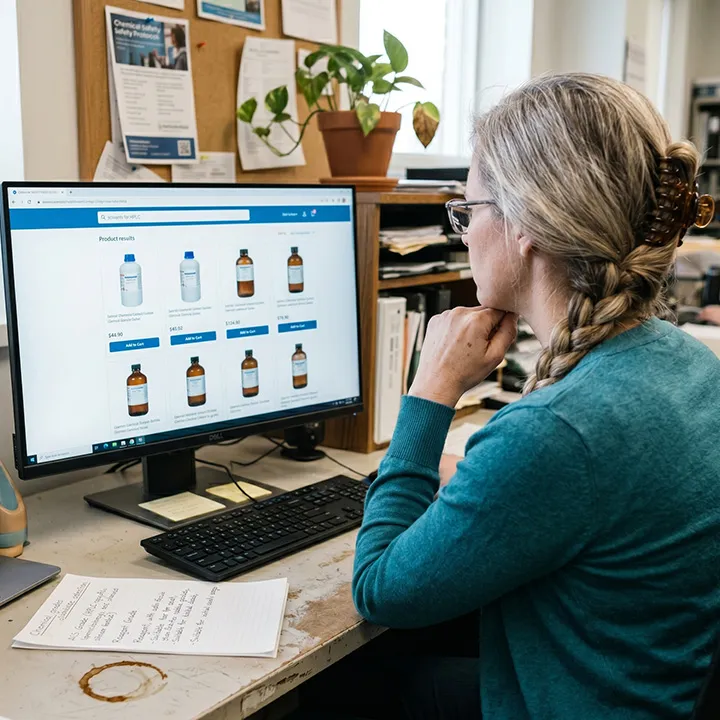
An online catalog with a shopping cart works for simple reorders of known products. It fails completely for custom formulations, bulk orders requiring price quotes, or recurring supply agreements. It also does not help buyers who think in application terms ("solvents for my HPLC method") rather than catalog terms ("Cat. No. S-4567"). The cart captures what buyers already know. It does not help them figure out what they need.
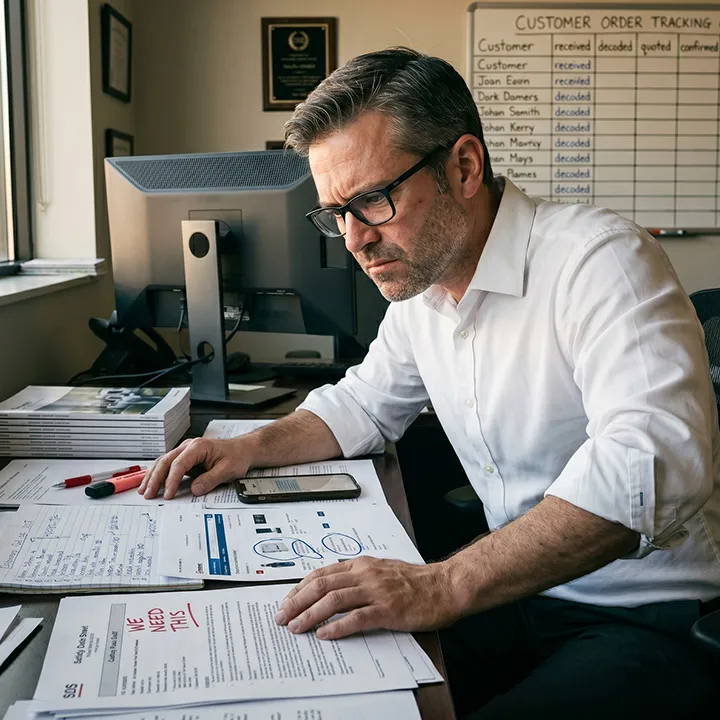
Your rep tells buyers to send whatever they have. They receive a handwritten list, a screenshot of a spreadsheet from another vendor, and a PDF of an SDS with "we need this" written in the margin. Your team spends three hours decoding the list, matching chemicals to your catalog, and sending clarification questions back. It is technically progress, but it is not efficient, and it does not scale.
Here is how Needs Analysis replaces the specification form for specific laboratory chemical scenarios.
A biotech startup is outfitting a new lab and needs a complete chemical and reagent inventory: 60 line items spanning solvents, acids, bases, buffers, cell culture media, and specialty reagents, all at specific grades with varying package sizes.
Without Chemical Supply Needs Analysis
The lab manager sends their wish list as a Word document with chemical names and approximate quantities. Your team spends four hours cross-referencing against your catalog, identifying grade ambiguities, and preparing a clarification list. The lab manager takes a week to respond to 15 clarification questions. Total time from list to quote: two weeks. A competitor who accepted the list and proactively recommended grades based on stated applications delivered their quote in three days.
With Chemical Supply Needs Analysis
The lab manager uploads their chemical list document. The AI extracts chemical names, maps them to your catalog using CAS number lookup, and flags grade ambiguities with application-based recommendations. The manager reviews, selects grades with chatbot guidance, adjusts quantities, and submits a complete 60-item specification in 20 minutes. Your team has a clean, catalog-mapped order ready to quote the same day.
A pharmaceutical QC lab wants to renew their annual chemical supply agreement with updated quantities, new products added, and pricing renegotiation for volume changes.
Without Chemical Supply Needs Analysis
Your rep emails the current agreement with a request to mark up changes. The QC manager redlines the PDF, adds handwritten notes for new products, and sends it back. Your team spends two hours interpreting the markup and creating a new specification document. Three rounds of email clarification follow over two weeks.
With Chemical Supply Needs Analysis
The QC manager's previous order history pre-populates the renewal form. They adjust quantities, add new line items using autocomplete, and flag products for pricing discussion. The AI identifies items with significant volume changes and suggests package size optimizations. Complete renewal specification submitted in 15 minutes.
A research lab needs a custom buffer formulation at a specific pH, concentration, and volume, with CoA documentation and sterility requirements for cell culture applications.
Without Chemical Supply Needs Analysis
Your custom formulation request form asks for chemical components, concentrations, target pH, buffer capacity, sterility requirements, endotoxin limits, and packaging. The researcher fills in the chemistry but does not know your packaging options or CoA capabilities for custom formulations. The form stalls. Your rep schedules a call, which takes a week to coordinate.
With Chemical Supply Needs Analysis
The researcher describes the application: cell culture, target pH 7.4, specific salt concentrations, sterile-filtered, endotoxin-tested. The AI translates the application description into your custom formulation specification format. Packaging and documentation options appear with plain-language descriptions. The researcher completes the request in 10 minutes, with the chatbot explaining the difference between sterile filtration and autoclaving for their application.
Most chatbot companies sell you a platform and wish you luck. AI companies sell you a model and tell you to figure out the rest. Needs Analysis is neither of those things.
We design, build, deploy, and continuously optimize your entire laboratory chemical and reagent intake process. The outcome you pay for is specific: qualified requirements data flowing into your CRM, collected automatically from your website visitors, without your sales team lifting a finger.
When AI handles the grind of requirements collection, your salespeople finally get to do the work they got into sales to do. They stop chasing spreadsheets and start building relationships. They stop being data entry clerks and start being trusted advisors. That is not a threat to your sales team. It is the biggest gift you can give them.
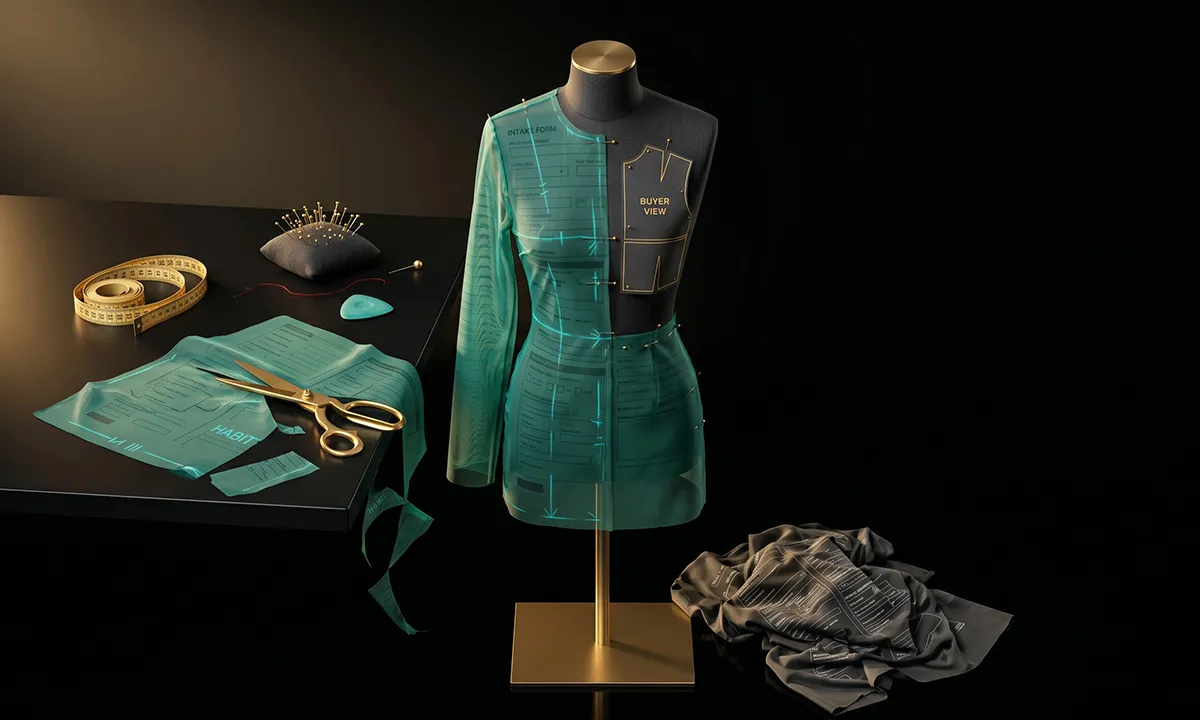
Our team studies your current laboratory chemical and reagent intake workflow, from the spreadsheet or form you send today to the back-and-forth emails that follow. We identify where prospects drop off, which questions cause confusion, and what data your configuration or engineering team actually needs versus what you are collecting out of habit. Then we rebuild the entire experience from scratch, optimized for completion, not just data collection.
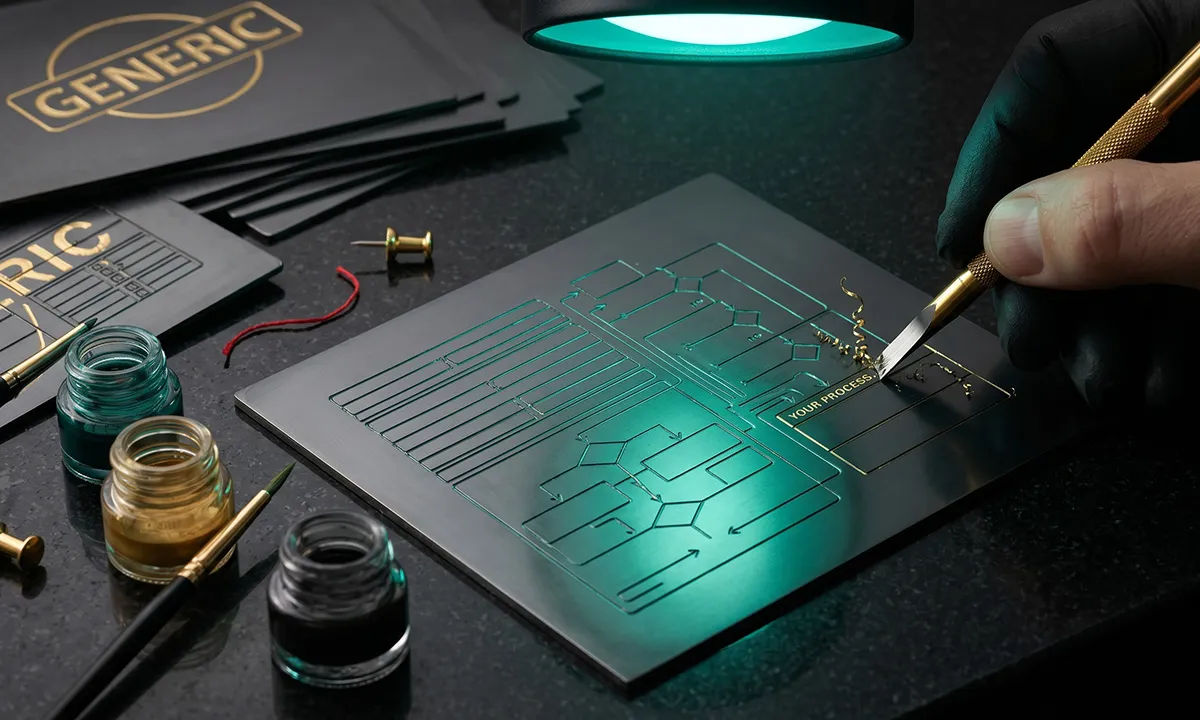
Every Needs Analysis deployment is custom. Your fields, your product logic, your conditional rules, your document types, your CRM mapping. We structure the intake to align with your actual laboratory chemical and reagent configuration and quoting workflow, so the data that arrives in your CRM is immediately usable by your team. This is not a template. It is a custom-built intake system trained on your products, your industry terminology, and your sales process.
After launch, our team reviews completion data, identifies friction points, and refines the experience.


You get a sales channel that improves each month without taking up any of your team's time.
CAPABILITY
DIY APPROACH
NEEDS ANALYSIS
Design
Your team builds forms in-house
We design the entire intake experience
AI Training
You configure rules yourself
We train AI on your products and documents
Document Analysis
Not available
AI extracts data from uploaded safety data sheets, chemical inventories, method documents, and purchasing records
Deployment
Your IT team integrates
We deploy within your ENGAGE chatbot
Monitoring
Your team reviews (if they have time)
Our team monitors completion rates daily
Optimization
Happens when someone has bandwidth
Continuous, data-driven improvement
CRM Integration
Your team maps fields
We configure routing, assignment, and field mapping
Follow-Up
Your team writes emails
We build targeted sequences for incomplete submissions
Accountability
Falls to whoever "owns" the form
We own the outcome: completed forms in your CRM
DIY APPROACH
Your team builds forms in-house
NEEDS ANALYSIS
We design the entire intake experience
DIY APPROACH
You configure rules yourself
NEEDS ANALYSIS
We train AI on your products and documents
DIY APPROACH
Not available
NEEDS ANALYSIS
AI extracts data from uploaded lab protocols, facility specifications, equipment inventories, and procedure documents
DIY APPROACH
Your IT team integrates
NEEDS ANALYSIS
We deploy within your ENGAGE chatbot
DIY APPROACH
Your team reviews (if they have time)
NEEDS ANALYSIS
Our team monitors completion rates daily
DIY APPROACH
Happens when someone has bandwidth
NEEDS ANALYSIS
Continuous, data-driven improvement
DIY APPROACH
Your team maps fields
NEEDS ANALYSIS
We configure routing, assignment, and field mapping
DIY APPROACH
Your team writes emails
NEEDS ANALYSIS
We build targeted sequences for incomplete submissions
DIY APPROACH
Falls to whoever "owns" the form
NEEDS ANALYSIS
We own the outcome: completed forms in your CRM
Your best chemical sales reps do not just take orders. They understand their customers' applications well enough to recommend grade upgrades that prevent failed experiments, suggest package size changes that reduce waste, and identify consolidation opportunities that save labs thousands of dollars per year.

But they cannot do any of that if they are spending hours each week decoding handwritten chemical lists and chasing specification clarifications.
Needs Analysis does not replace your sales team. It frees them from the administrative burden of order specification so they can focus on what they do best: application consultation, account development, and relationship building. When AI handles the grind of chemical-to-catalog mapping and specification collection, your reps get to do the work they got into chemical sales to do.
The rep who always has a proactive recommendation for a better grade, a better package size, or a new product that solves a problem the customer did not know they had? That is not someone working more hours. That is someone who finally has the bandwidth to think about their accounts instead of processing paperwork.
AI does not make the chemical sales role smaller. It makes it bigger. Better recommendations. Larger orders. Deeper account penetration. The ceiling goes up.
Needs Analysis is an add-on to ENGAGE, so it inherits all of ENGAGE's integration capabilities and adds intake-specific connections for the laboratory chemical and reagent industry.


Installs through your existing ENGAGE chatbot. No additional code, no separate widget, no IT project. If ENGAGE is live on your site, you can activate Needs Analysis within it.
Learn more about the ENGAGE chatbot platform
IMPLEMENTATION
We do not hand you software and disappear. Here is what goes into building a Needs Analysis deployment that actually works.

Phase 1
Before we build anything, we study what you are doing today. We review your current laboratory chemical and reagent intake forms, spreadsheets, and questionnaires. We interview your sales and configuration teams about what data they actually need versus what they collect out of habit. We map the end-to-end process from inquiry to deliverable quote, identifying where prospects drop off, where data quality breaks down, and where your team spends the most time on back-and-forth.

Phase 2
We design the field sequence, conditional logic, and section grouping for optimal completion in your specific laboratory chemical and reagent context. Every field gets plain-language descriptions and help text so prospects know exactly what is being asked. We configure autocomplete libraries from your product catalog and known values. We train the document analysis AI on your industry's document formats, ensuring high extraction accuracy from day one.

Phase 3
We run hundreds of test scenarios across different laboratory chemical and reagent prospect types and use cases. We validate the accuracy of document analysis against your actual document formats. We test CRM integration and verify that data lands in the correct fields. We test follow-up workflows end-to-end. We provide a private preview for your team to try breaking it.
Phase 4
We activate Needs Analysis within your live ENGAGE chatbot, monitor real interactions during the first weeks, and make rapid adjustments based on actual prospect behavior. We establish baseline completion metrics and brief your sales team on the new lead flow.
Ongoing
We review completion data weekly, analyze performance monthly, and continuously train the AI as new document types and field patterns emerge. We update the intake as your products, pricing, or requirements change. Your needs analysis process stays current because we actively maintain it.
INVESTMENT
Needs Analysis is an add-on to Salesperson ENGAGE. Pricing is based on the complexity of your specific requirements collection process.

Size of product catalog and number of SKUs

Complexity of grade, purity, and packaging configuration logic

Document types that need AI analysis (SDS, inventories, method documents, purchasing records)

CRM and ERP integration complexity

Custom formulation and recurring order workflow requirements
Compliance flagging for DEA, hazmat, and export controls
Follow-up automation and collaborative workspace requirements
One-Time Setup
There is a one-time setup fee that covers the intake process audit, AI training, custom form design, CRM integration, and testing. This varies based on complexity, because a 15-field equipment sizing intake is fundamentally different from a 60-field technical assessment with document analysis.
Monthly Service
After launch, a monthly service fee covers continuous monitoring, optimization, AI retraining, follow-up automation, and ongoing support. This is not a software license that sits idle. It is an active service delivering completed intake forms into your CRM every month.
PROJECTED IMPACT
10-20% → 70-85%
Intake form completion rate
Before: 10-20%
3-10 business days → Under 15 min
Average time to complete intake
Before: 3-10 business days
3-6 per prospect → 0-1
Follow-up emails before completion
Before: 3-6 per prospect
2-4 hours → Near zero
Sales rep hours per intake
Before: 2-4 hours
5-15 business days → Same day to next business day
Time from inquiry to deliverable quote
Before: 5-15 business days
40-60% → Under 15%
Prospects lost to intake friction
Before: 40-60%
"This problem plagued our sales team for years. We knew AI could solve it, but we had no idea where to start. It honestly felt like a pipe dream. Then we started working with Salesperson Inc. and were shocked at how quickly they built it and how well it worked. Their team are seasoned sales funnel experts, not IT people or AI engineers. It is like talking to a colleague who actually cares about the results of your business."
Laboratory Chemical and Reagent Supplier
If the answer involves hours of your team decoding handwritten lists and chasing clarifications, you already know the problem.
Needs Analysis replaces the manual specification process with an intelligent system that maps your customers' chemical needs to your catalog automatically.
Right now, a lab manager is on your website with a 50-item chemical order. Will your intake process capture it cleanly, or will they email a messy list to your competitor instead?
Stop conducting a needs analysis the hard way. Let the AI handle the process while your team handles the deals.